










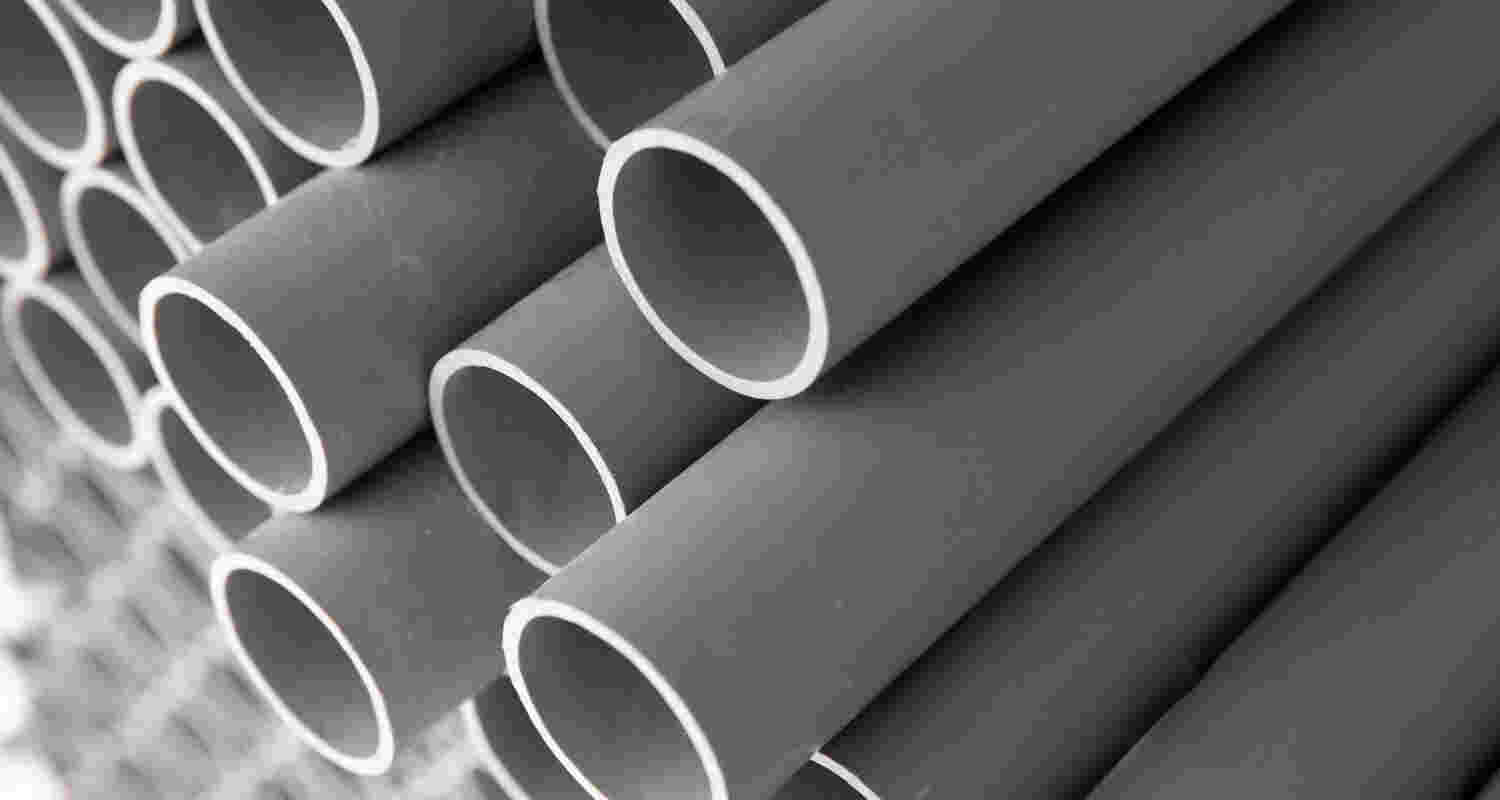
PVC is a material almost all of us have in our homes in pipes, cables, or flooring. But what exactly is PVC, what is it made of, how safe is it as a material, and why is it so frequently used in frame construction? PVC, or polyvinyl chloride, is one of the most widespread synthetic plastic materials, with numerous applications in daily life and construction.
In this article, we will analyze what PVC is, its main properties, its uses, the difference between it and uPVC, and what one should know when this specific material is used in windows, balcony doors, and frames in general.
What is PVC?
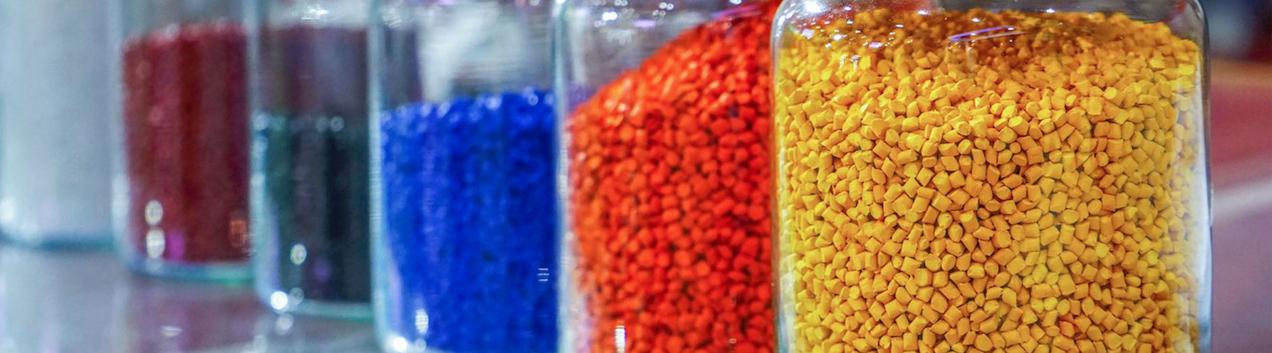
PVC or polyvinyl chloride is a synthetic thermoplastic polymer. This means it can be molded using heat and take various shapes, depending on its intended application.
It is primarily produced from chlorine, derived from common salt, and ethylene, derived from petroleum. PVC is a composition of ethylene (43% in petroleum), chlorine, stabilizers, and plasticizers. The quality of the plasticizers used in PVC manufacturing determines its price, its durability over time, but primarily its safety. It is used in pipes, cables, flooring, medical applications, packaging, and frames because it is economical, lightweight, moisture-resistant, and has good insulating properties.
Here, it is important to know that the composition of PVC is not uniform and can vary even in similar products (e.g., frames). This means different (quantity and composition) stabilizers, plasticizers, chlorine, or ethylene can be used depending on the application. For example, a company that produces PVC frames in Germany uses a different composition for plastic frames intended for Northern Europe than for the South (e.g., Greece) due to increased sunlight.
Where is PVC used?
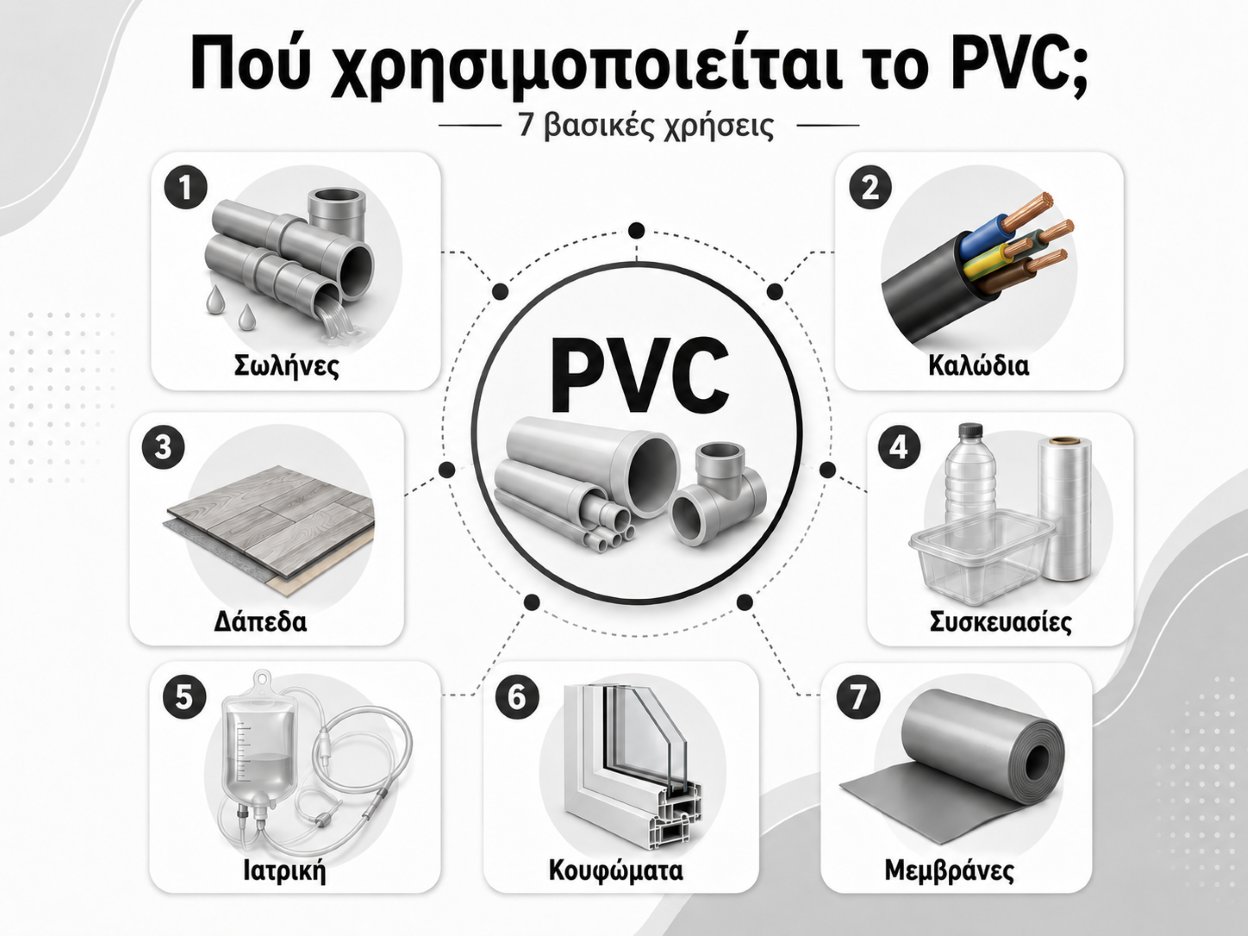
PVC is used in a great many applications because it can be produced in different forms and adapted to different needs. It is not, therefore, a material that concerns only frames.
The most common uses of PVC are in:
- Water supply and drainage pipes, due to resistance to moisture and chemicals
- Cables as insulating sheathing
- Flooring, due to cost, ease of cleaning, and durability
- Packaging, due to moldability and low weight
- Medical applications requiring flexibility and specific properties
- Frames, due to thermal insulation, sound insulation, and lower cost
- Membranes and linings
PVC, therefore, is found in many parts of a residence or commercial space. It can be in piping, electrical installations, flooring, linings, packaging, as well as in so-called plastic or synthetic frames.
In any case, however, we should not treat all uses in the same way. A pipe protected within an installation has different requirements than a frame exposed to intense solar radiation for decades.
What are the main properties of PVC?
PVC became so widespread because it combines certain practical characteristics. It is economical compared to many other materials, has a low weight, exhibits good moisture resistance, and can be used in many forms. Furthermore, as a thermoplastic material, it can be molded and used in large-scale industrial production.
The main properties of PVC are:
- it is moisture resistant,
- it has a relatively low cost,
- it can be rigid or flexible,
- it has good insulating properties,
- it requires limited maintenance in many applications,
- it can be produced in different colors and forms,
- it is affected by composition, additives, and production quality.
In frames, where the construction must withstand time, sun, use, and mechanical stresses, the quality of the profile and reinforcements is of great importance.
What is uPVC used in frames?
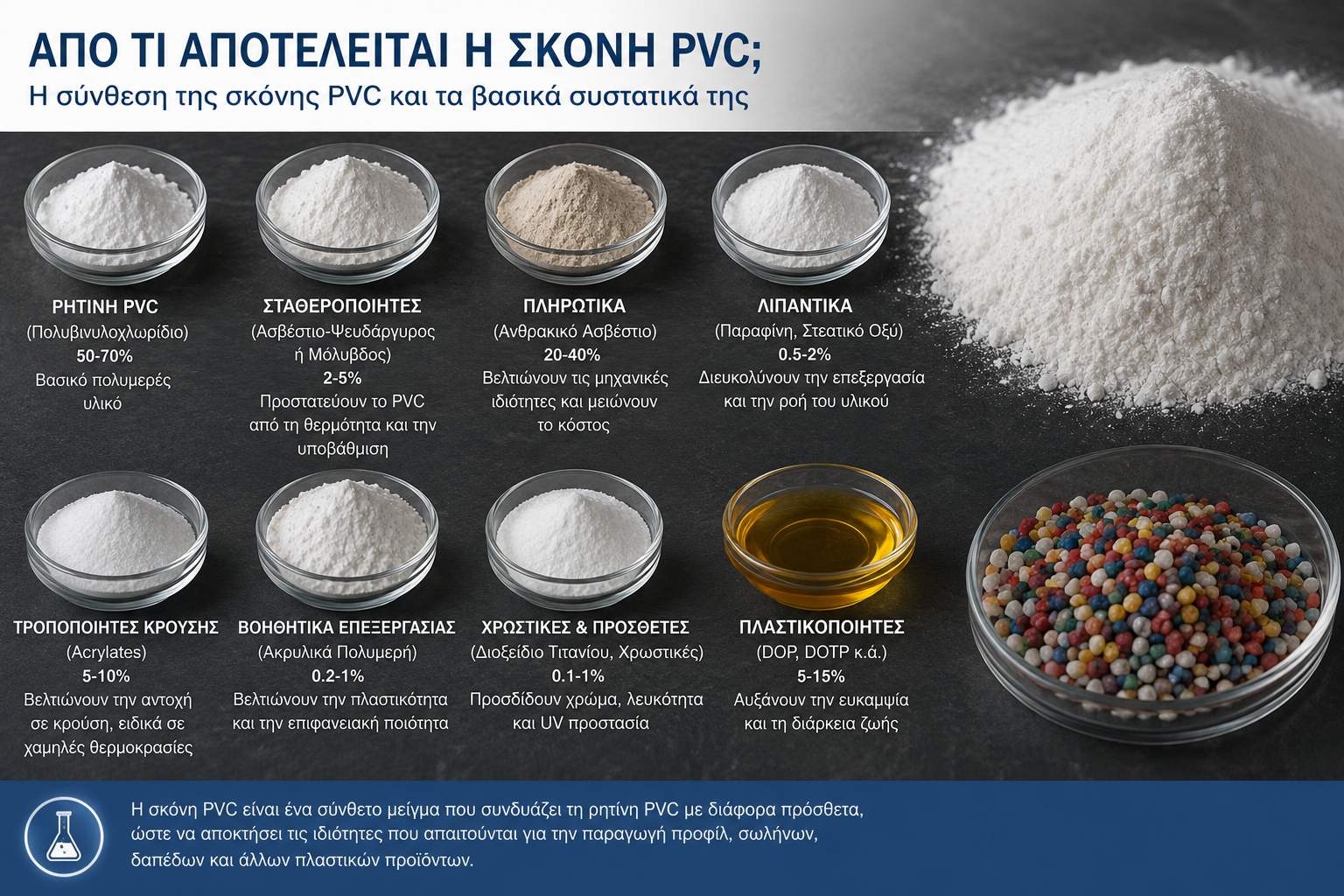
uPVC is rigid PVC. The name comes from unplasticized PVC, meaning PVC without the same use of plasticizers found in more flexible applications. uPVC, not simple PVC, is used in frames. Specifically, it is used for the production of window and balcony door profiles, which are then internally reinforced with metal elements (usually iron) to achieve better mechanical performance and durability.
This distinction is important. A flexible PVC product is different from a uPVC profile for a frame. PVC frames must have specific mechanical strengths, maintain their geometry, work with mechanisms, glazing, seals, shutters, or blinds, and meet the construction requirements.
Also, as we mentioned above, the composition of PVC is not uniform and can vary even in similar products (e.g., frames). This means different (quantity and composition) stabilizers, plasticizers, chlorine, or ethylene can be used depending on the application. For example, a company that produces PVC frame profiles in Germany uses a different composition for plastic frames intended for Northern Europe than for the South (e.g., Greece) due to increased sunlight. Thus, uPVCs differ.
PVC and Greek climatic conditions
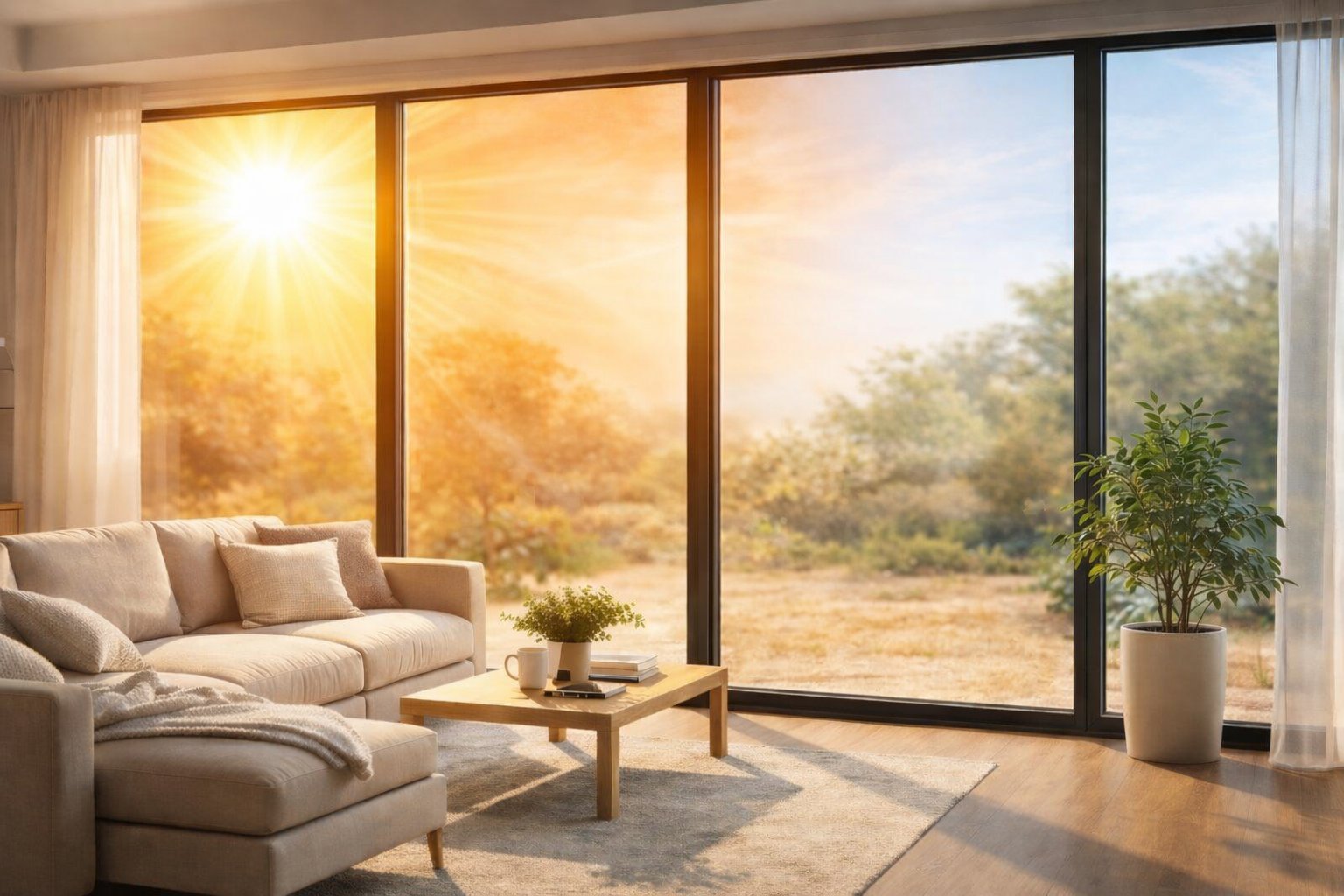
A point that must be particularly considered for PVC frames is the climatic conditions in Greece. Intense sunlight, UV radiation, high temperatures during summer months, and coastal areas create different requirements compared to Northern European countries, from which many PVC systems originate.
For this reason, before choosing PVC frames, it is advisable to check if the specific profile is suitable for the area, the orientation of the opening, the dimensions of the frame, and its exposure to the sun. Otherwise, problems may appear over time, such as discoloration, yellowing (Coplam frames), deformations, or difficulties in the proper functioning of the frame.
Advantages of PVC in frames
PVC frames became known primarily because they offer a good balance of price and thermal insulation performance. In several cases, especially in simple casement frames of small or medium dimensions, they can provide satisfactory thermal and sound insulation.
The main advantages of PVC frames are:
- Lower purchase cost
PVC frames are usually more economical than thermally broken aluminum frames, mainly due to the lower price of the raw material and the industrial production of the profiles. - Good thermal insulation
PVC as a material has low thermal conductivity compared to metals, which is why it is used in applications where thermal insulation performance is required. In frames, however, the final performance depends not only on the frame material but also on the glass, seals, proper construction, and installation. - Good sound insulation
In combination with appropriate glazing, PVC frames can provide good sound reduction, which is particularly important for homes on busy streets or in noisy areas. - Limited maintenance
PVC frames do not need painting like wooden frames. Cleaning is usually done with simple cleaners and water, without special maintenance procedures. - Moisture resistance
PVC does not rust and is not affected by moisture in the same way other materials can be. This characteristic is one of the reasons it is also used in pipes or other water applications.
Disadvantages of PVC in frames
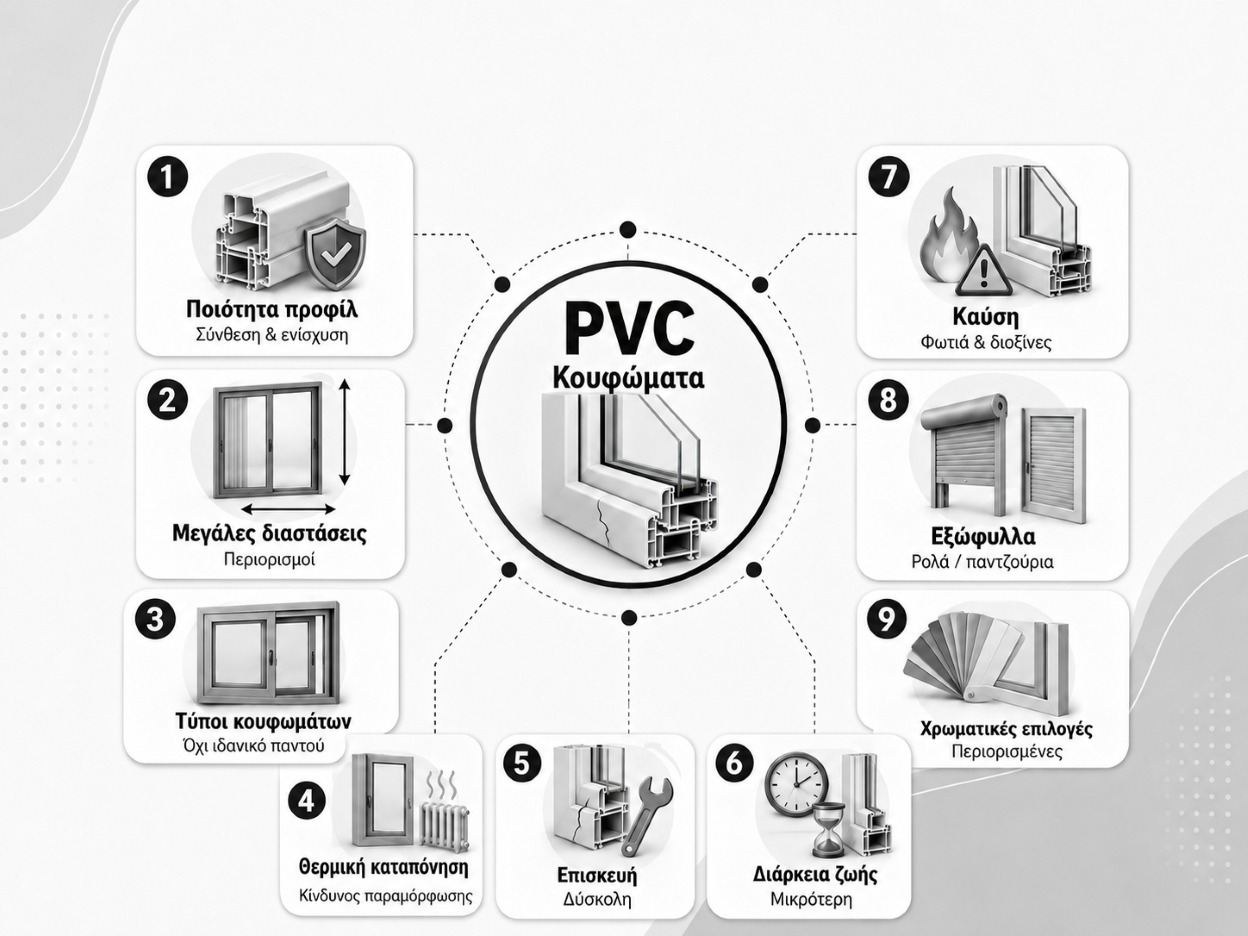
Although PVC has several advantages, when it comes to frames, there are also important points to consider before purchasing.
- The quality of the profile plays a decisive role
Not all PVC frames are the same. The composition of the material, additives, stabilizers, profile thickness, and metal reinforcement significantly affect durability over time. - Limitations in large dimensions
For very large balcony doors, special constructions, or openings subjected to significant mechanical stresses, PVC has more limitations compared to aluminum. Aluminum, due to its mechanical properties, more easily allows for large and special constructions. - Issues with frame types
In some cases, especially for recessed sliding frames or constructions requiring specific Greek solutions, PVC frames are not always the ideal choice. It is advisable to request technical manuals and specifications before deciding. For this reason, aluminum sliding frames are recommended. - Sensitivity to thermal stress
PVC frames should not be placed too close to intense heat sources, such as radiators, fireplaces, or other installations that develop high temperatures. In some cases, deformations may occur in parts of the frame. - Difficulty of repair
PVC profiles are heat-welded at the corners. This provides good sealing at the joints, but in case of severe impact or damage, repair is not always easy or practically cost-effective. - Shorter lifespan
PVC has a shorter lifespan compared to competing products. - Resistance to burning
PVC has low resistance to fire and produces dangerous substances (dioxins) when burned. - Difficulty in manufacturing external covers
Due to its mechanical properties, PVC has limitations in the manufacture of external covers (shutters or blinds). - Limitations in color options
PVC has limitations in color options as coloring is done with film.
Is PVC safe?

The safety of PVC is a topic that requires careful phrasing. We should not confuse the final PVC product with vinyl chloride, which is the monomer used in PVC production.
The National Cancer Institute states that vinyl chloride is primarily used for PVC production and is a substance linked to an increased risk of cancer, while noting that PVC itself as a finished material is not known or suspected to be carcinogenic.
Also, both Scients Direct in its article Polyvinyl chloride (PVC), its additives, microplastics, and human health, and the newspaper Guardian have references to the dangers of PVC.
This does not mean that all issues surrounding PVC are irrelevant. The ultimate safety of a product depends on its composition, additives, use, exposure conditions, and the management of the material when it burns or is disposed of, or when we inhale it as dust!
Therefore, we should distinguish three things:
- PVC as a finished material,
- the substances used in its production or as additives,
- the behavior of the material under extreme conditions, such as fire.
In the event of plastic products burning, dangerous fumes can generally be produced. This is why in residential applications, especially when we talk about frames, external covers, cables, and interior linings, it is advisable to consider not only the price but also the overall behavior of the material.
Is PVC ecological?
PVC is a material about which there is significant controversy. On the one hand, the industry emphasizes that the material is durable, recyclable, and that a large part of its composition is based on chlorine from salt and not exclusively on petroleum or natural gas.
On the other hand, environmental organizations such as Greenpeace have strongly criticized PVC, characterizing it as a particularly problematic plastic from an environmental perspective, mainly due to its production, additives, combustion, and waste management.
Consequently, the correct question is not whether PVC is ecological, but how it is produced, how it is used, how long it lasts, whether it is properly recycled, and what happens at the end of its life. In frames, for example, a long lifespan is an important factor. If a material needs faster replacement or cannot be easily repaired, this also affects its true environmental footprint.
Aluminum or PVC for frames?
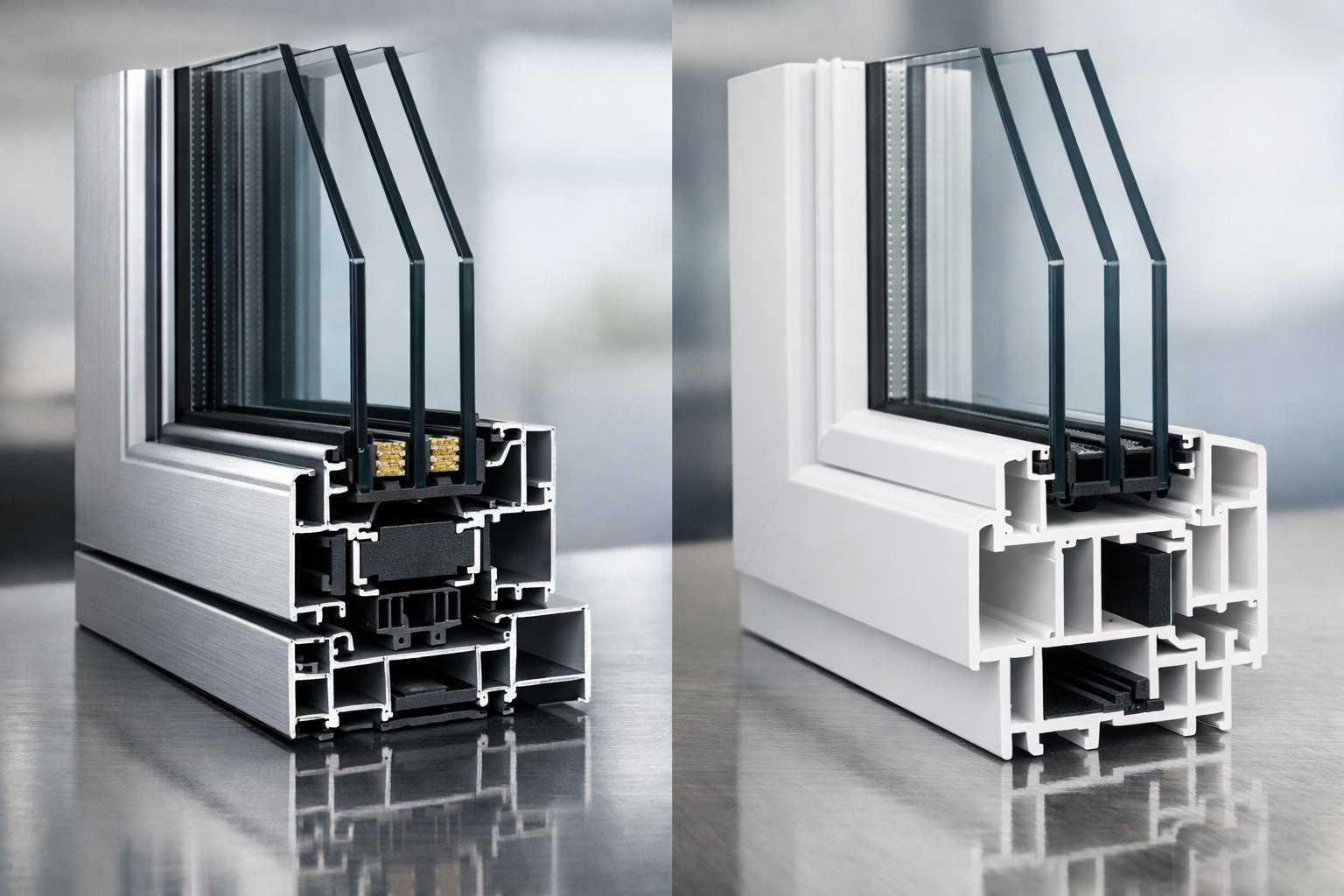
PVC frames can be an economical solution with good thermal insulation, especially in simple constructions and openings without high demands. On the other hand, aluminum frames usually excel in mechanical strength, capability for large dimensions, variety of designs, color stability, reparability, and options for shutters, blinds, screens, and special constructions.
In Greece, where we have intense sunlight, high temperatures, coastal areas, and often large balcony doors, aluminum frames remain the safest and most comprehensive choice.
Read more about the behavior of the two materials in Greece in our article Aluminum or PVC for my frames? Advantages and disadvantages
What to look for before buying PVC frames
Before purchasing PVC frames, it is advisable to request specific information and not just a general offer. Price alone is not enough to evaluate quality.
You should know:
- what is the composition of the PVC and if it is intended for use in sunny countries
- what is the country of origin of the profile,
- what is the system series,
- if there is a technical manual,
- what metal reinforcements are used,
- if the construction is permitted for the dimensions of the opening,
- what warranty is given for white and colored profiles,
- if PVC or aluminum shutters or blinds are provided,
- what applies to spare parts and mechanisms in the future,
- if the color is suitable for intense sunlight,
- if the solution is suitable for a coastal area or an area with elevated temperatures.
In any case, technical evaluation must precede selection. A small bathroom window does not have the same requirements as a large south-facing balcony door that receives sun all day. Similarly, a residence in a coastal area has different needs than an apartment in the city center.
Read more in our article: Aluminum or PVC for my frames? Advantages and disadvantages