








What is the difference between thermally broken frames and cold aluminum frames.
What are thermally broken aluminum frames – energy-efficient frames and how do they differ from simple (cold) ones? Customers often ask us about the differences between thermally broken aluminum frames and simple – conventional – cold aluminum frames, and wonder which to choose. Let’s first look at their differences.
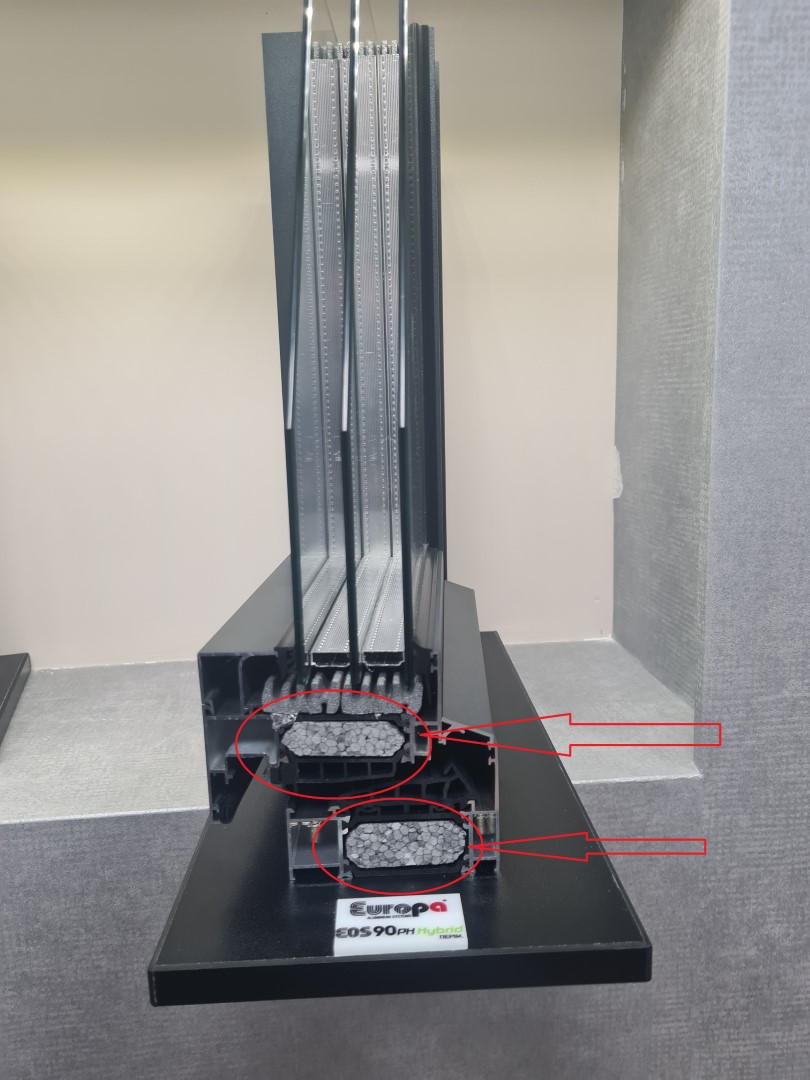
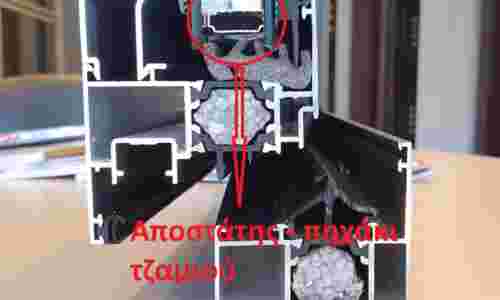
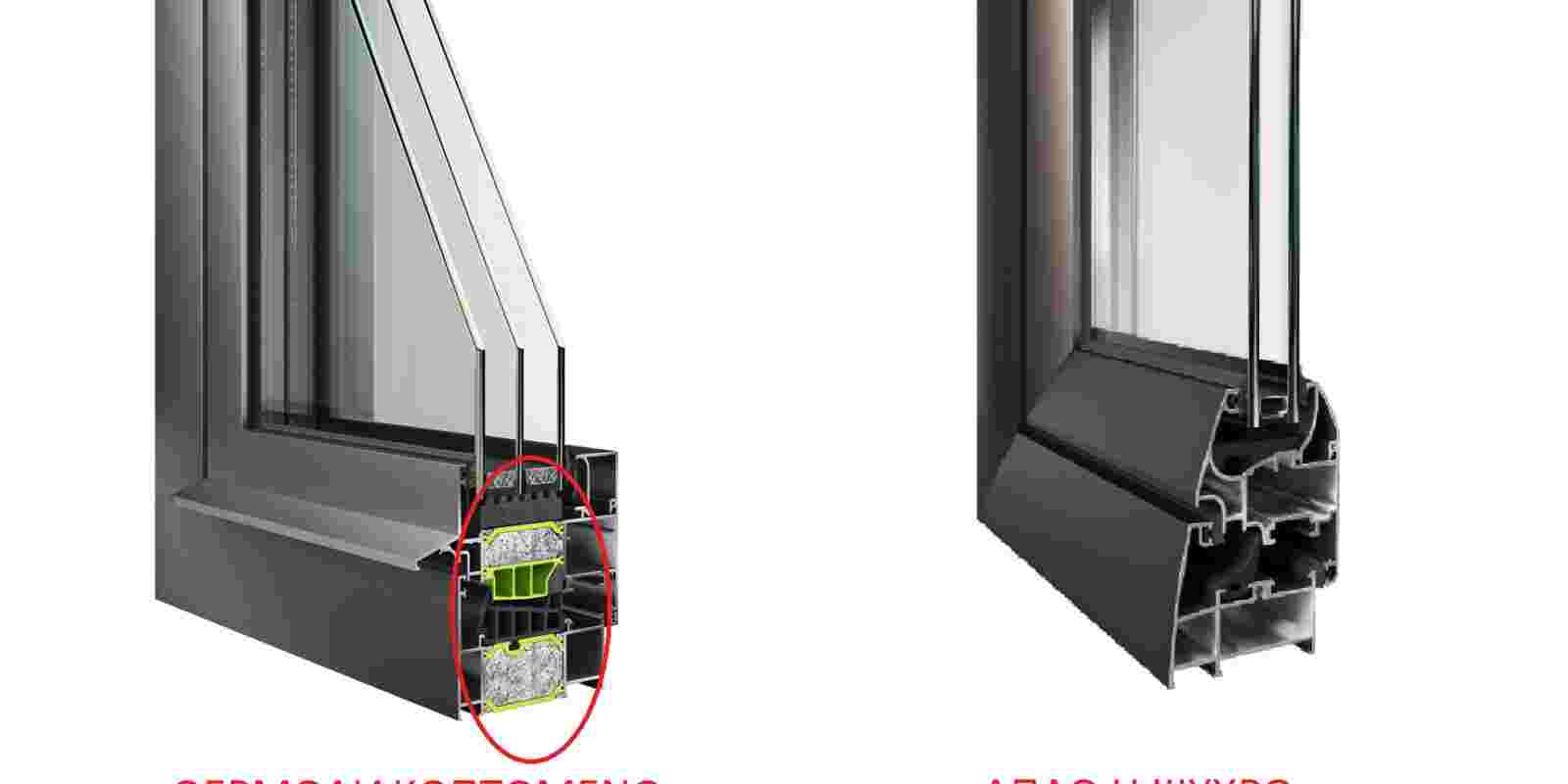
Aluminum as a metal is a good conductor of heat. This means that in winter, conventional aluminum frames allow the transfer of cold from the external environment into our home, and similarly, in summer, the transfer of high temperatures. To prevent the transfer of heat and sound to and from our space, thermally broken aluminum frames are now manufactured. These frames contain special insulating materials inside their profiles (see photo No. 1), which contribute to both thermal insulation and sound insulation of the frame. By installing thermally broken aluminum frames, we maintain our space at the ideal temperature for us, regardless of external conditions, while also eliminating annoying noises.
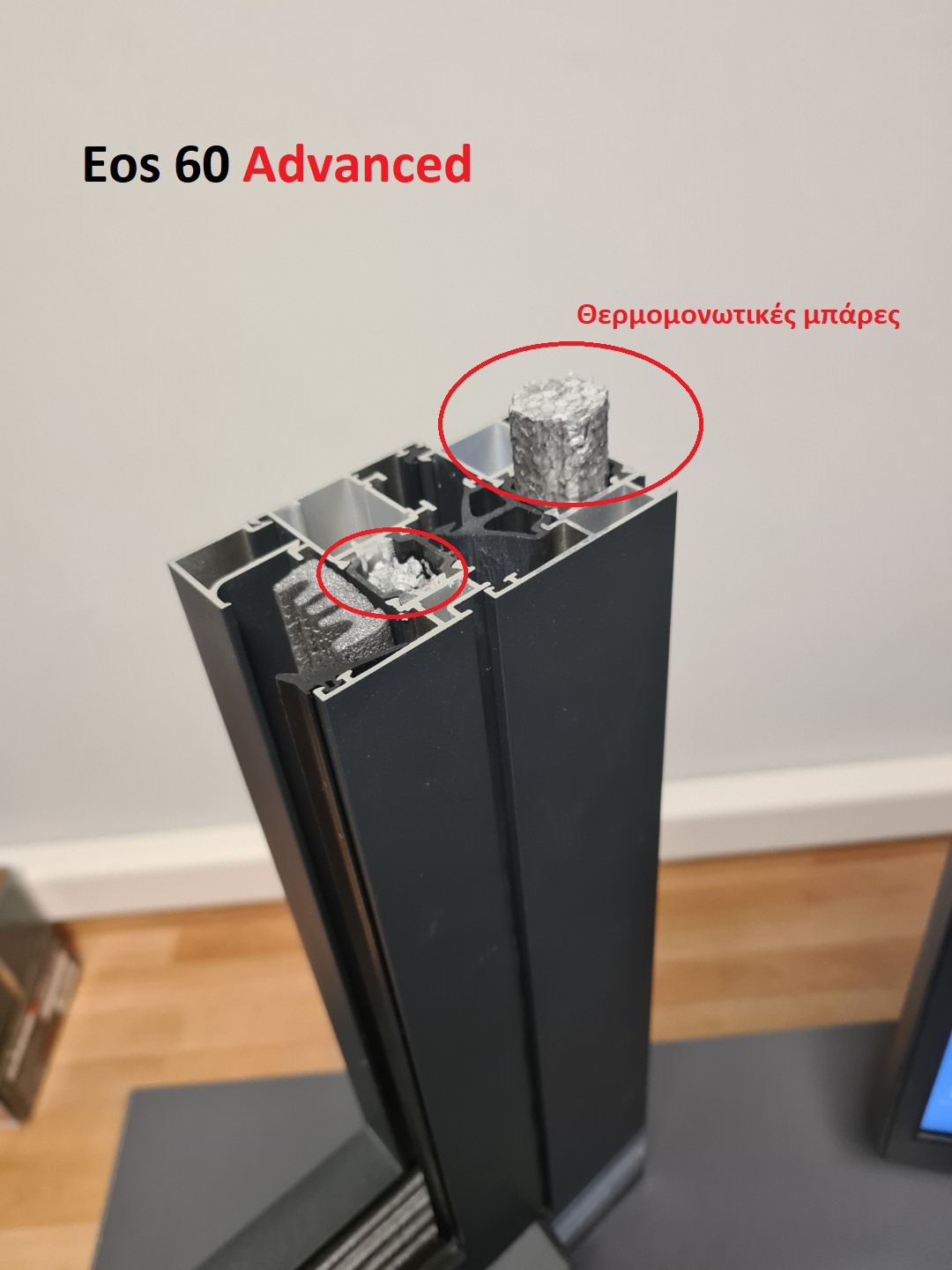
What is the difference between thermally broken aluminum profiles and standard ones?
Thermally broken aluminum profiles – energy-efficient ones – are the latest technology for thermal and sound insulation because they have insulating materials (polyamide, thermal break bars, resin, etc.) inside their profiles, which dramatically increase the thermal insulation – thermal transmittance and sound insulation of aluminum frames.
What is the price difference between thermally broken – energy-efficient frames compared to standard aluminum frames?
Aluminum profiles typically account for 20-30% of the total frame surface. Frames made from architectural profile series without thermal breaks (cold or standard) do not offer significant thermal insulation properties due to the high thermal transmittance coefficient of the profile, which has a Uf value of 7 W/m2K.
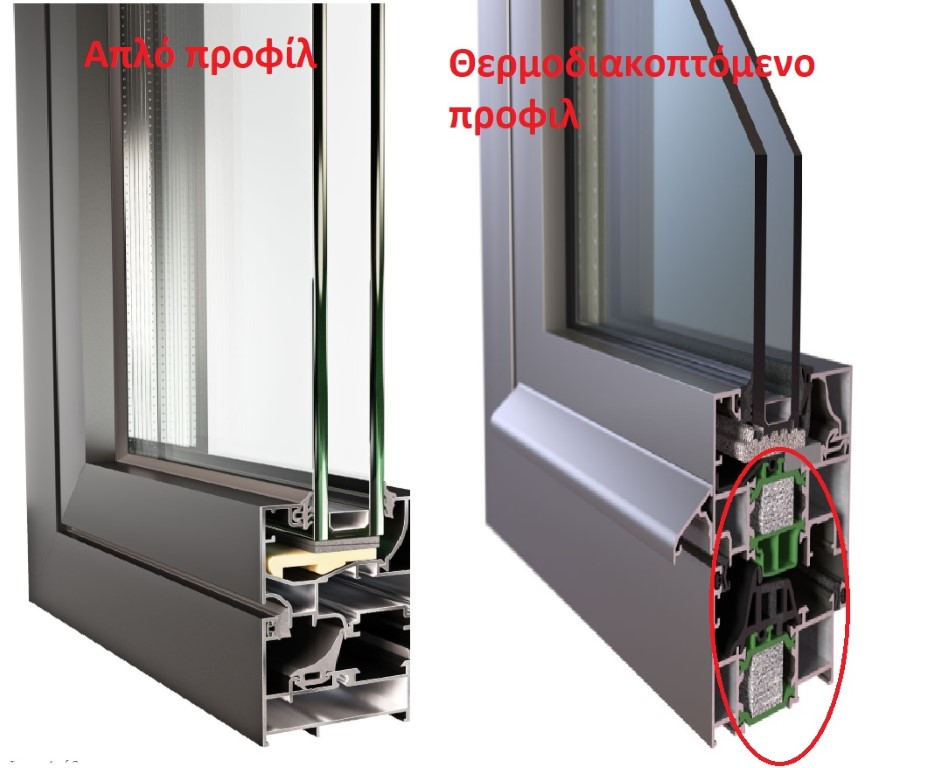
In recent years, the evolution in architectural aluminum profiles has been significant regarding the improvement of their thermal insulation properties. By thermal break in frames, we mean the interruption of heat transfer achieved by dividing the profile into two parts and joining them using insulating materials that isolate its internal and external surfaces.
This allows for a significant reduction in the transfer of heat (or cold) transmitted from the interior to the exterior environment (or vice versa). It is enough to consider that profiles with thermal breaks offer thermal transmittance values reduced by up to 85% compared to profiles without thermal breaks. The first patent for the manufacture of thermally broken profiles was filed in Switzerland in 1952, and today all profile series for frames provide thermally broken profiles.
energy-efficient – thermally broken profiles dramatically increase the technical characteristics of frames. The price difference between thermally broken – energy-efficient frames and standard aluminum frames is in the order of 5 – 10%. Additionally, standard – cold aluminum frames are not acceptable for the new K.EN.A.K (Building Energy Performance Regulation), which is why aluminum profile manufacturers have provided new improved values for thermally broken – energy-efficient aluminum frames.
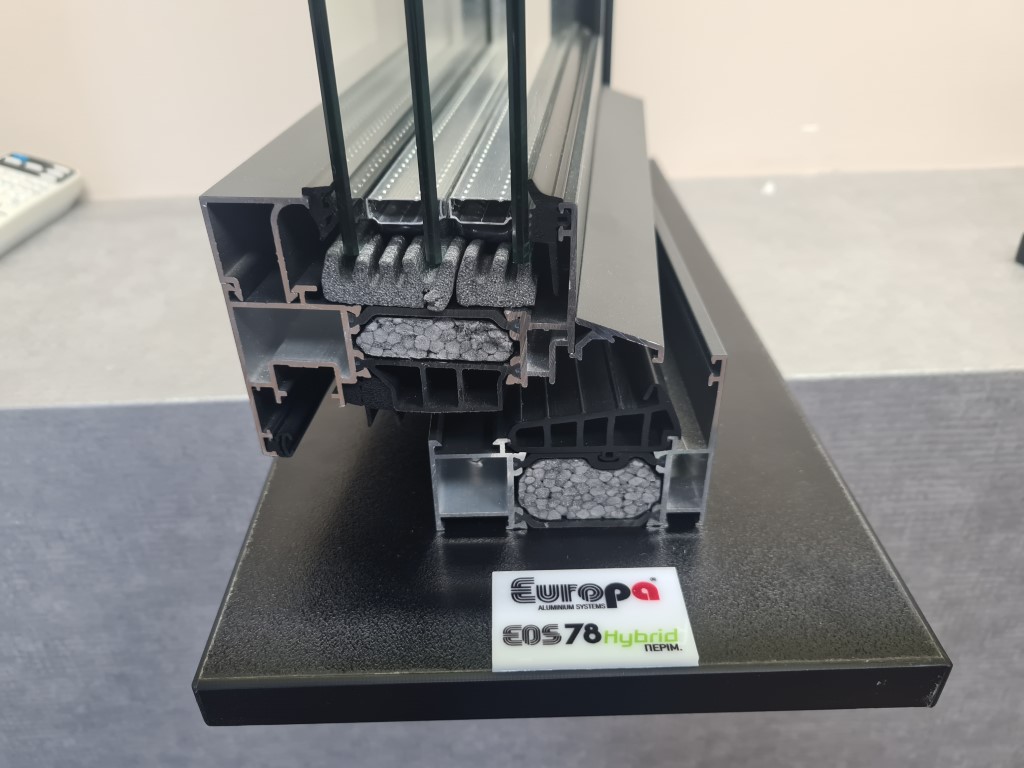
Energy-efficient aluminum frames and energy-efficient glazing
Energy-efficient aluminum frames are considered those frames consisting of thermally broken aluminum profiles and energy-efficient glazing. We can also install energy-efficient glazing in standard – cold aluminum frames, but for a frame to be considered energy-efficient, it must consist of a thermally broken profile and energy-efficient glazing, because this achieves better frame coefficients.