













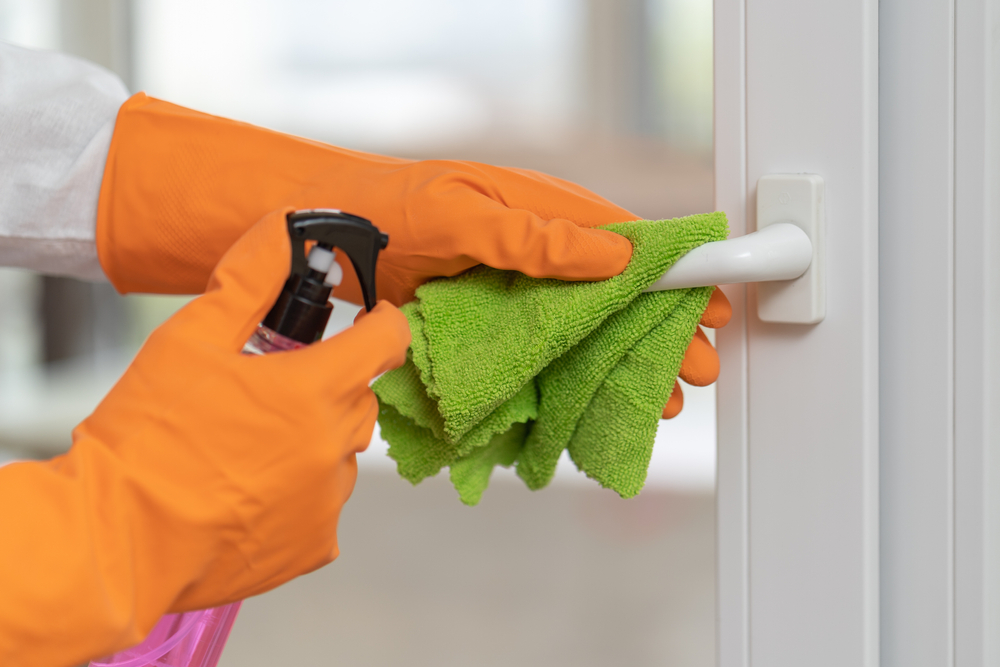
One of the advantages of aluminum frames is their high durability over time, combined with minimal maintenance. Cleaning window frames is an easy process, provided certain rules are followed, depending on the material the window is made of (aluminum frames, PVC frames, wooden frames, etc.). Let’s see, then, how to safely clean aluminum frames, aluminum shutters and their louvers (plastic, aluminum), screens, the glass of our frames, and roller shutters.
How often should we clean – wash our frames
Regular cleaning of our frames is important for their proper functionality. The cleaning of frames and its frequency depend on the geographical location. The first cleaning should be done immediately after installation (after the insulating materials, e.g., silicones, have dried) and all work has been completed. Generally, it is recommended to clean our frames twice a year to remove dust and dirt and to fully utilize sunlight. Cleaning your windows in spring can help remove dust and dirt from winter, and doing it again in autumn will remove dust and dirt, ensuring you always make the most of your natural light.
See an indicative table for how often we should clean our windows depending on the geographical location of our property.

How to clean aluminum frames – windows
• Cleaning should be done in the morning at temperatures below 30 °C and not when the temperature is high or when the surface of the aluminum profile is hot, to prevent our cleaning agents from drying quickly and leaving stains.
• Initially, and if they are new frames, remove the protective films from the aluminum profile surfaces (they should be removed within 15 days, as it becomes impossible to remove them afterward). If there are adhesive labels (energy glazing markings) on the glass – panes, after installing the new windows, try to clean the glass with blue alcohol. If removal with alcohol is not possible, carefully use the special scraper or razor used to remove road tax stickers from car windshields. Caution! The sides of the scraper or razor must be fully in contact with the glass, not its corners – tips, to avoid scratching the energy-efficient glazing.
• If silicones or putties remain on the windows during the installation of aluminum frames, clean them with blue alcohol. Immediately remove building materials such as plaster, lime, cement while they are still wet, because over time the paint will be damaged.
• Place a towel at the bottom of the frame, from the inside, to avoid dirt that may drip during cleaning.
• Use lukewarm water and soap or dish detergent for cleaning aluminum. If you want an even better result when cleaning window frames, use one of the many special cleaning products available on the market instead of soap. Just make sure these products have a pH between 5.5 and 8 (neither acidic nor alkaline). Absolutely avoid using chlorine or caustic cleaning liquids when cleaning aluminum. If you have a stubborn stain or dirt, use car cleaners (not acidic but neutral). Be careful with car creams; there are special categories depending on the color (glossy, matte, metallic, etc.). Also, Scoop cleaner is suitable for aluminum frames for stubborn stains, and it also repairs any scratches (see below).
• Start from the exterior side of the frame and, using a hose with moderate pressure (never use pressure washers), begin washing from the top of the frame downwards (do not use well water). After finishing the exterior surface, start on the interior surface (inside the house), using a cotton cloth or sponge (to avoid leaving residue) and a towel at the bottom of the frame to avoid dirtying the floors. Do not use brushes, hard sponges, wire wool, or sandpaper.
• Using a dry cloth, wipe the edges and the top part of the frame – aluminum profile (aluminum cleaning).
• Then, clean the glass surface with a glass cleaner, pushing the water downwards.
• Using a dry cloth, dry starting from the top of the frame. When drying the frames, they should still be wet, because if the frame has dried, it will leave stains.
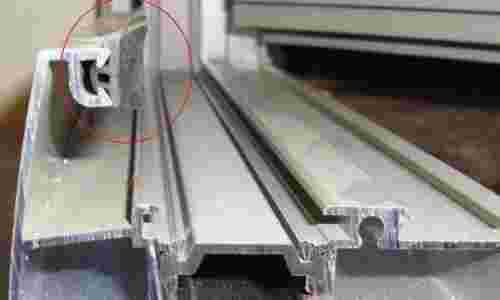
• Finally, use a vacuum cleaner and its special attachments to thoroughly clean the bottom of the guides and sills for their unobstructed operation and proper frame cleaning.
• The rubber seals of windows and balcony doors should be sprayed with a special silicone spray or grease and wiped with a clean cloth (approximately every 3 years). The frame components (tilt mechanisms, hinges, etc.) need lubrication, which will ensure a longer lifespan and good functionality (e.g., SONAX SX90). Do not oil – lubricate the wheels of sliding frames with lubricants.
• If you see scratches – scuffs or bumps on aluminum frames (aluminum doors and windows), see what to do in our article aluminum frame paint problems
Some useful ”TIPS” for cleaning frames and glass
• Kitchen paper or newspaper might have been a good method for some old housewives, but nothing compares to cotton fabrics. Wipe with a cotton cloth that leaves the glass shiny and completely streak-free.
 .
.
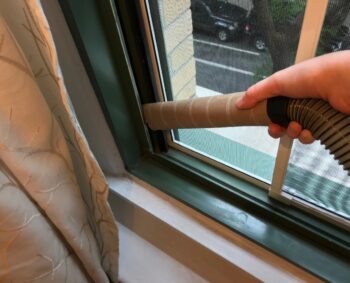
• Always make sure to vacuum the sills or guides at the bottom of the frame with a vacuum cleaner and its special attachments. If you do not have the special attachments, you can attach the hard part of a kitchen paper roll to the front of the vacuum (see photo).
How do we clean the glass – panes of our frames?

There is no safer and more effective way to clean glass than with the special professional cleaner that you can easily acquire.
How to clean glass that is not accessible from the outside
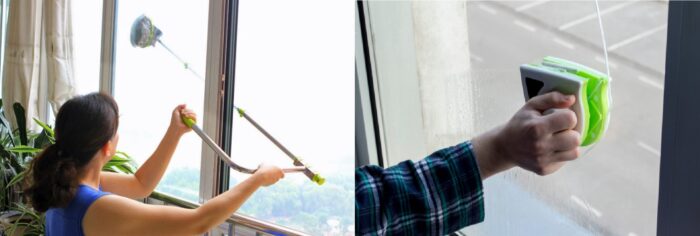
To clean the glass of frames that are not accessible from the outside, we can use a pole (frame cleaning). If this is still not feasible, we can use cleaning sponges with magnets, which are available commercially. See new devices for cleaning ”blind” frames in our article New technologies in frames – windows
How do we clean the louvers of our shutters and the roller shutters of our house?
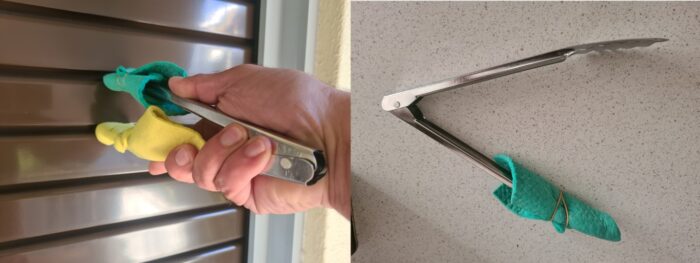
For the louvers of shutters – roller shutters (exterior blinds) and in areas that cannot be reached with a cloth, we can clean them by attaching two small cloths to a pair of tongs (see photo).
• How do we clean our roller shutters that are not accessible from the outside?
If we have roller shutters and there is no access from the outside, we can open the roller shutter box and clean the louvers from the inside.
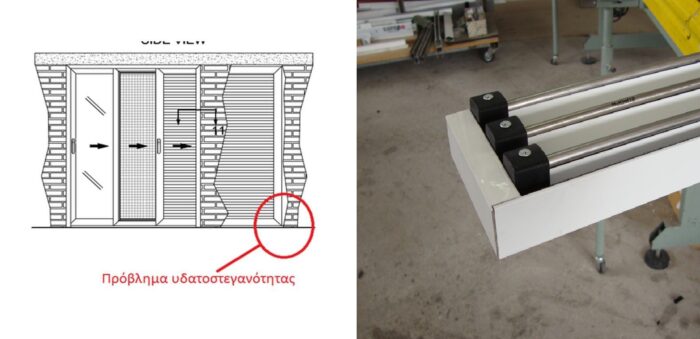
• Never pour too much water into the guides of recessed sliding frames that do not have barriers – caps. If we do, a large part of the water will be transferred through the guides to the interior masonry (tunnel – hole) and cause dampness.
• 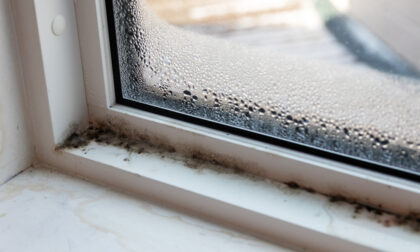
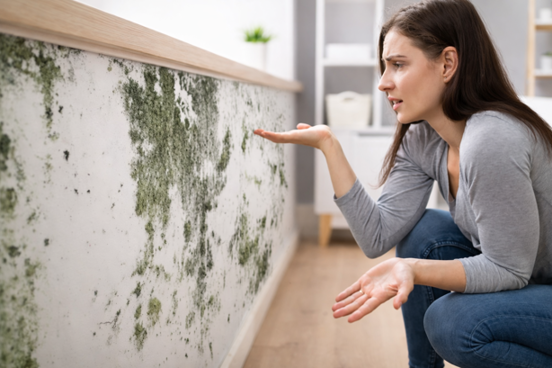
By using 3% hydrogen peroxide and a small toothbrush, you can remove a large part of the mold and blackening that exists on the edges of the frame. Watch the relevant video (mold and frames). Be careful not to let the hydrogen peroxide come into contact with the paint and aluminum profiles. See more in our article mold on frames and condensation
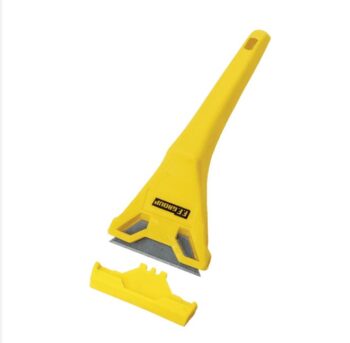
• The adhesive labels (glazing markings) found on the glass of new frames are removed with the help of a special scraper. If the adhesives are not removed, soak them with blue alcohol.
• Do not wash your frames during periods of strong sunlight. There is a risk that they will dry before you can wipe them, resulting in spots and marks.
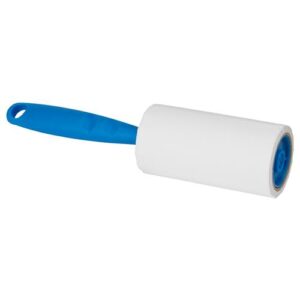
• For cleaning screens, you can use a vacuum cleaner (see below) or alternatively a dust removal roller.
Avoid acidic cleaners

Powder coating manufacturers for aluminum frames state in their technical manuals: “Please take seriously into account that the use of cleaners requiring the use of gloves is not recommended and should be avoided, as such a warning indicates that the cleaner is very strong and therefore unsuitable for cleaning the powder-coated surface. Do not use cleaners based on harsh solvents. If it is necessary to remove materials from the surface, such as paints or glue, and the use of a solvent is essential, then the mildest possible solvent should be used, such as white spirit, turpentine, isopropanol, or alcohol.”
Polishing frames

In domestic applications, the use of a high-quality car polishing cream, always in combination with the manufacturer’s instructions, will clean the surface and provide the desired decorative protection for a certain period.
Maintenance instructions and cleaning of screens – insect screens
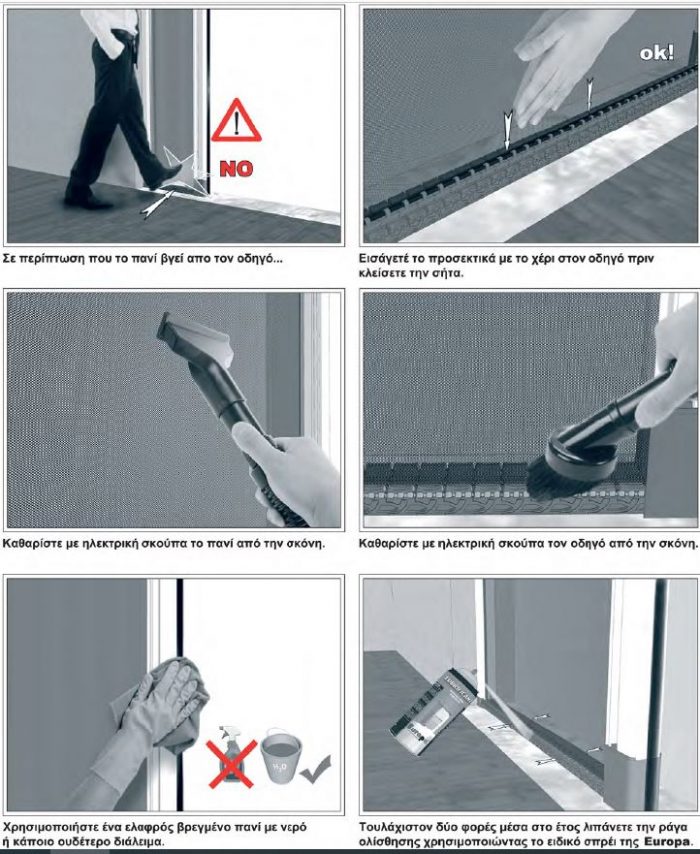
How to maintain or clean a screen – insect screen? See the instructions below or download the screen maintenance instructions from our products or our library. A general use instruction for all types of screens is to close them when not in use, as the fabrics and tracks of the screens polymerize – are damaged by the sun.
Frame maintenance and lubrication – oiling mechanisms
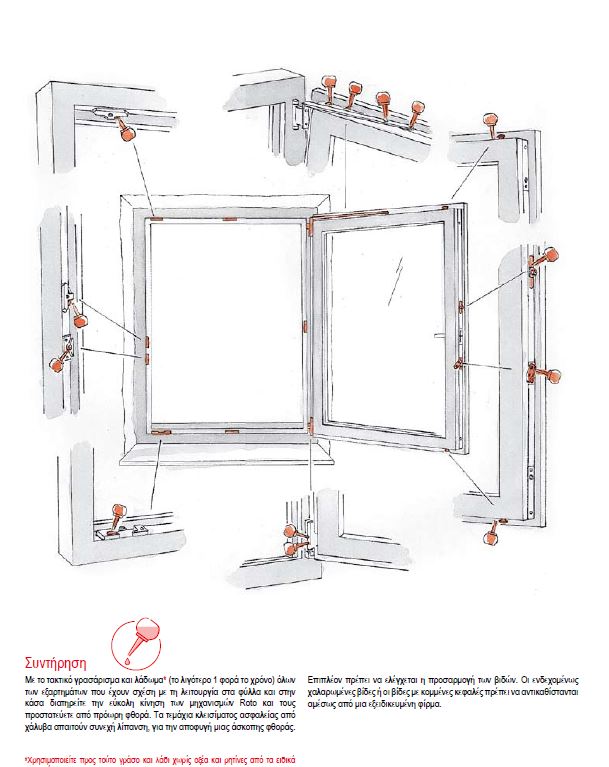
Read what you need to do to properly maintain your frames and how to lubricate their mechanisms in our article on frame maintenance.