






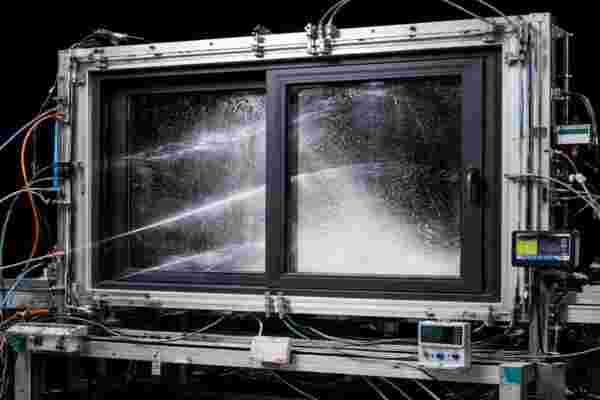



A common question from many consumers is How to reduce the cold drafts from frames – windows. The answer to this question is simple and easy. Close your shutters – external covers or the roller blinds of your home. But how much energy do we save (how much cold do we reduce) by closing the shutters – external covers or the roller blinds of your home? Which external covers (shutters or roller blinds) achieve better thermal insulation and why, as well as which roller blind or shutter slats are the best?
Let’s see with real examples and the use of a thermal camera how much energy we save by closing shutters – external covers or the roller blinds of our home (doors, windows), and also what Uw,rb is, the Thermal Transmittance Coefficient with Roller Blind/External Cover in closed position, and Uw,corr, the Corrected Thermal Transmittance Coefficient of the frame.
How much energy do we save by closing the external covers or roller blinds of your home
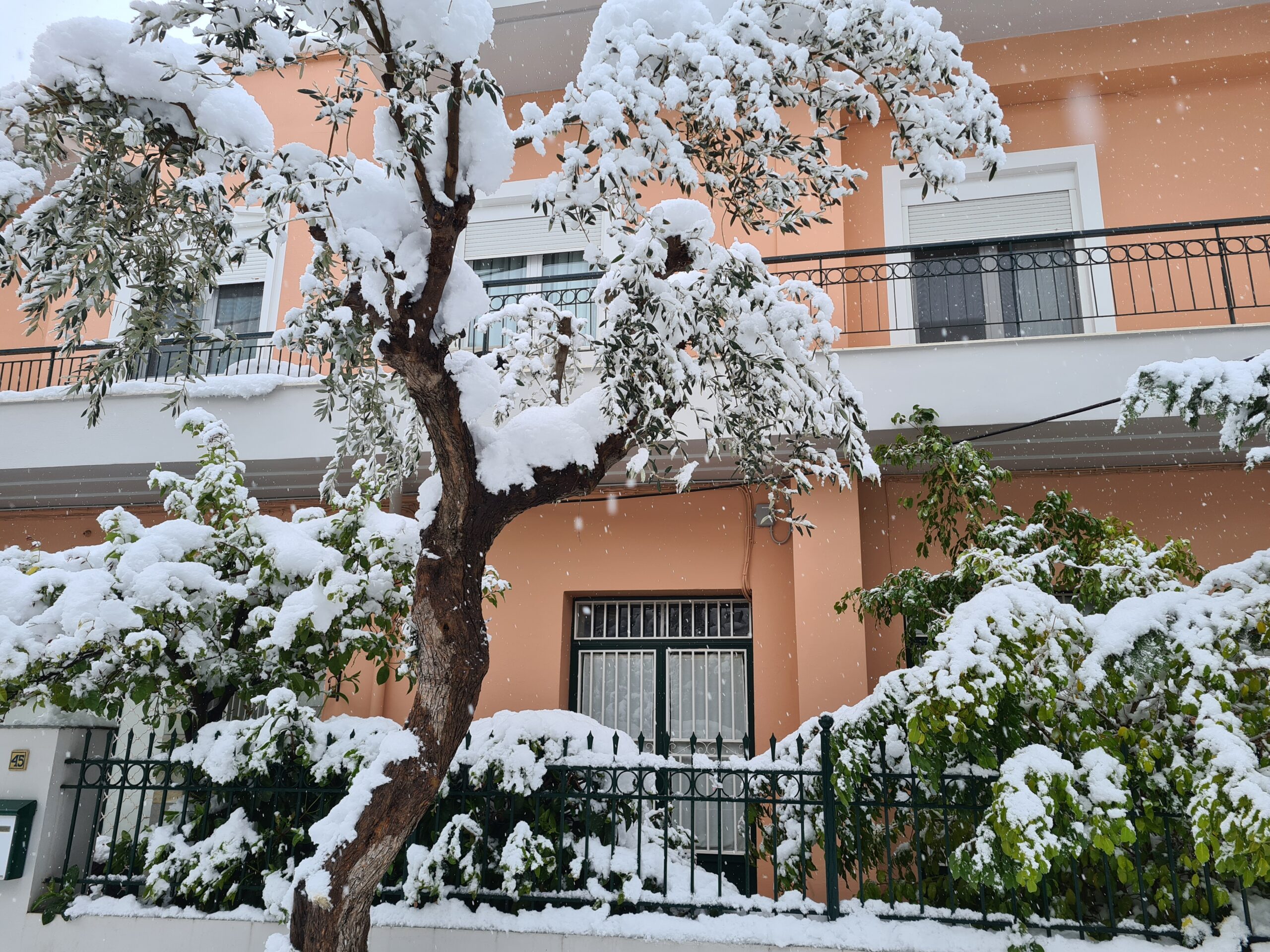
Let’s look at a real example, using a thermal camera, conducted on a thermally broken sliding recessed aluminum frame (see the series), with dimensions 195 X 227, with aluminum external covers – shutters and an outdoor temperature of 8 °C.
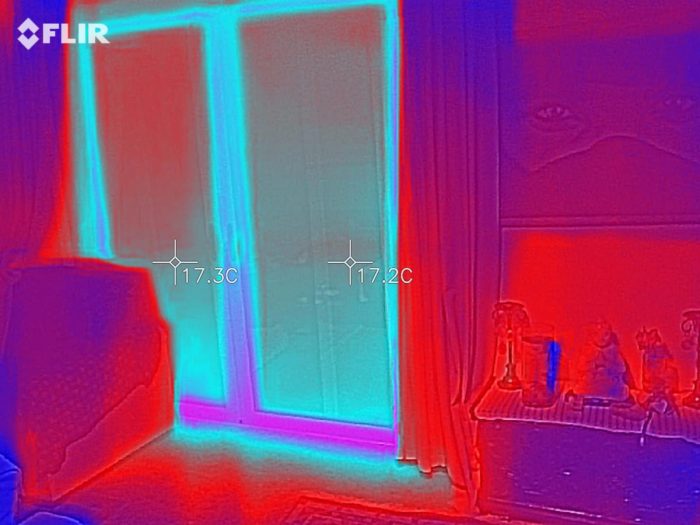
The above photo was taken using a thermal camera and the external covers – shutters of the sliding recessed frame are closed. The outdoor temperature is 8 °C, while as we can see, the indoor temperature (inside the house) with closed shutters on the aluminum frame is 17.3 °C.
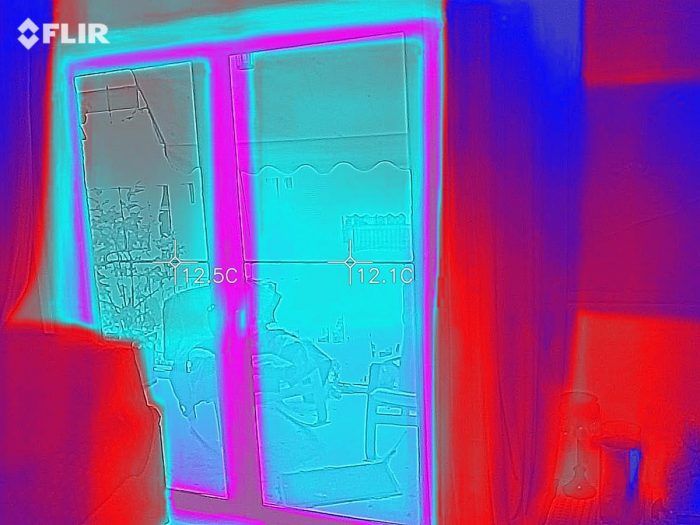
In the next photo, we have opened the external covers/shutters of the aluminum frame (the glass panes remain closed). As we observe, the temperature in this photo, on the surface of the frame, is 12.1 °C.
In summary, in the 1st case, the aluminum external covers – shutters were closed, and the temperature was 17.3 °C. When we opened the shutters – external covers, the temperature on the surface of the frame went down to 12.1 °C. The resulting difference is 5.2 °C, which practically means that we have an energy saving of approximately 43%.
Therefore, by closing the external covers (shutters or roller blinds) of this specific frame, we will achieve an energy saving of approximately 43%.
Here we should reiterate that the experiment was conducted on an energy-efficient sliding recessed frame, with dimensions 195cm X 227cm (width X height) and an outdoor temperature of 8 °C. The slats of the shutter of this specific sliding frame are aluminum, perforated (Europa Per-270 code).
The next question we will examine is which external covers insulate (thermal insulation) better, roller blinds or shutters – and why (How to reduce cold drafts from frames – windows).
Which external covers insulate (thermal insulation) better, roller blinds or shutters – and why?
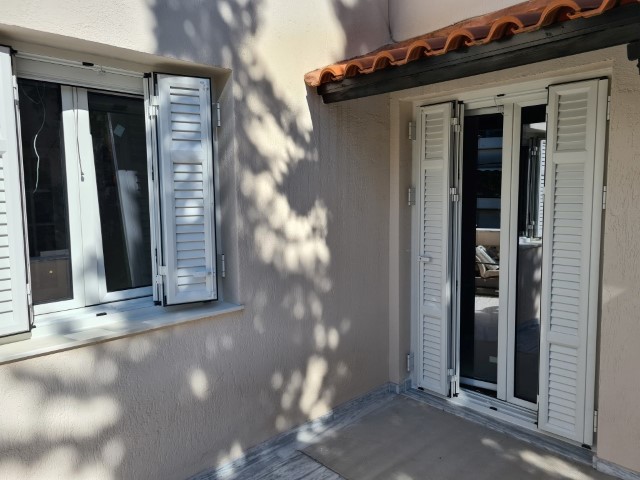
In this example, we will see which external covers insulate (thermal insulation) better, roller blinds or shutters – and why? How much do shutter slats affect the thermal insulation of the frame, and to what extent do roller blind slats (perforated, heavy-duty, aluminum with polyurethane filling) increase the thermal insulation of the frame (doors – windows).
Before looking at this specific example, we need to explain two indicators, the Uw and Uw,rb (Thermal Transmittance Coefficient with Roller Blind/External Cover in closed position) indicators, to understand it.
Uw shows us the thermal transmittance – thermal insulation coefficient of the frame (aluminum profile + glazing), while Uw,rb shows us the thermal insulation coefficient of the entire frame with the external cover closed (aluminum profile + glazing + closed roller blind or shutter external cover).
1st Example: Thermally broken aluminum frame with opening shutter – blind
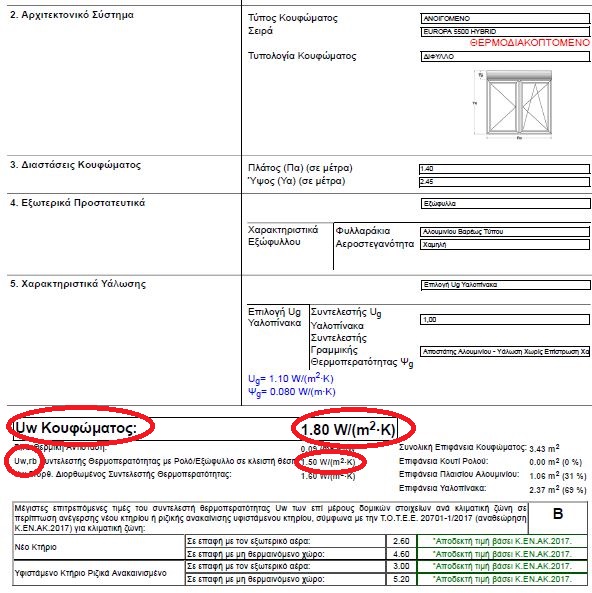
In the above photo, we see an opening thermally broken frame with opening shutters – blinds, with dimensions 140cm X 245cm (width X height).
This specific frame has a thermal insulation – thermal transmittance coefficient with open shutters Uw = 1.8W, while it has a thermal insulation – thermal transmittance coefficient with closed shutters Uw,rb = 1.5W.
From the above example, it follows that if we close the opening shutters on this specific frame (aluminum balcony door), we will have an energy saving of approximately 20%.
2nd Example: Thermally broken aluminum frame with surface-mounted thermally broken roller blind
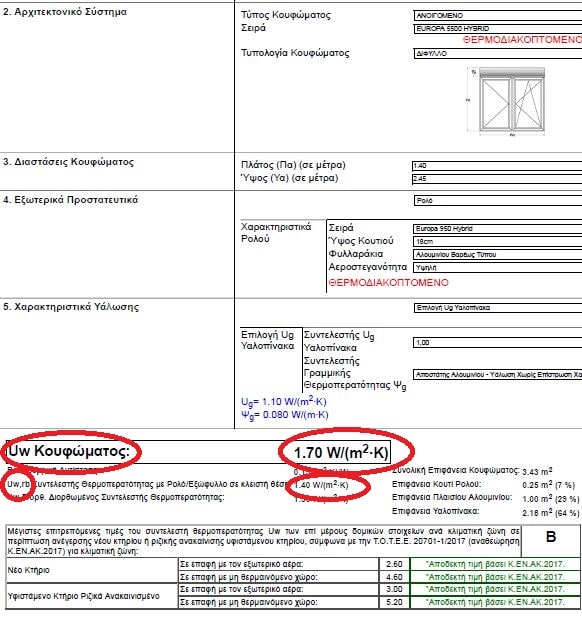
In the above photo, we see an identical opening thermally broken frame as in the 1st example (140cm X 245cm) with the difference that we have installed a surface-mounted thermally broken roller blind as an external cover.
This specific frame has a thermal insulation – thermal transmittance coefficient with open roller blinds Uw = 1.7W, while it has a thermal insulation – thermal transmittance coefficient with closed roller blinds Uw,rb = 1.4W.
From the above example, it follows that if we close the roller blinds on this specific frame (aluminum balcony door), we will have an energy saving of approximately 22%.
So the answer to the question “How to reduce cold drafts from frames – windows” is to close the external covers.
Which external covers insulate better, roller blinds or shutters?
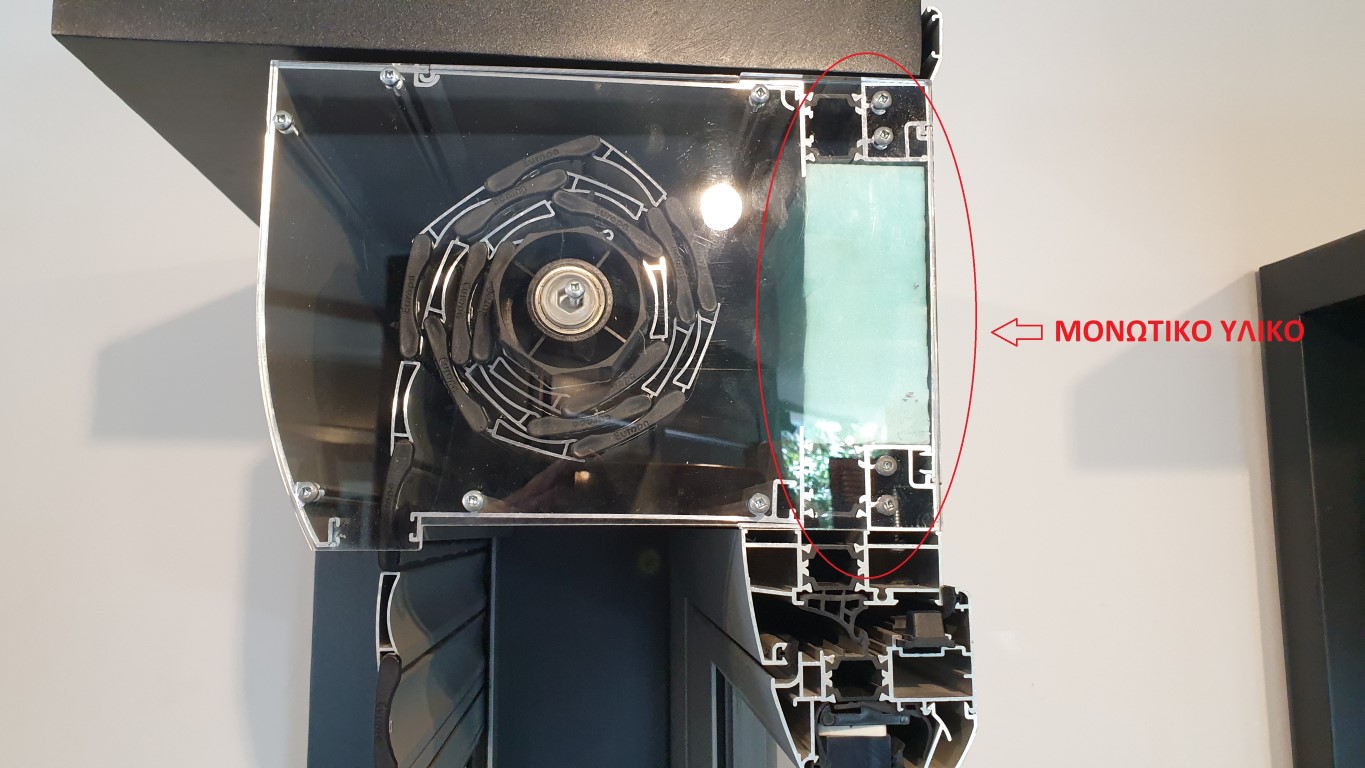
Based on the above examples, for frames of similar dimensions and types, in the 1st case with opening shutters and in the 2nd with roller blinds, the answer to the question is that closed roller blinds achieve greater energy savings compared to shutters. Roller blinds have a greater energy saving of approximately 7%. This percentage will increase significantly if we enlarge the opening area, compared to our example (balcony door 140cm X 245cm).
But why do thermally broken aluminum roller blinds, when closed, achieve greater energy savings than opening aluminum shutters?
The answer to this question is simple. Aluminum roller blinds, when their slats are completely closed, seal – insulate better because at the sill (bottom part) they seal with rubber, and their slats (heavy-duty, aluminum polyurethane) close hermetically, unlike shutter slats, which allow air to pass through their permanent ventilation holes. Additionally, thermally broken roller blind boxes include special insulating materials inside the box (see thermally broken roller blind boxes).
Opening aluminum shutters are classified due to their holes – openings in air permeability class 1, while roller blinds are in air permeability class 4-5.
What is Uw,rb Thermal Transmittance Coefficient with Roller Blind/External Cover in closed position and Uw,corr. Corrected Thermal Transmittance Coefficient of the frame.
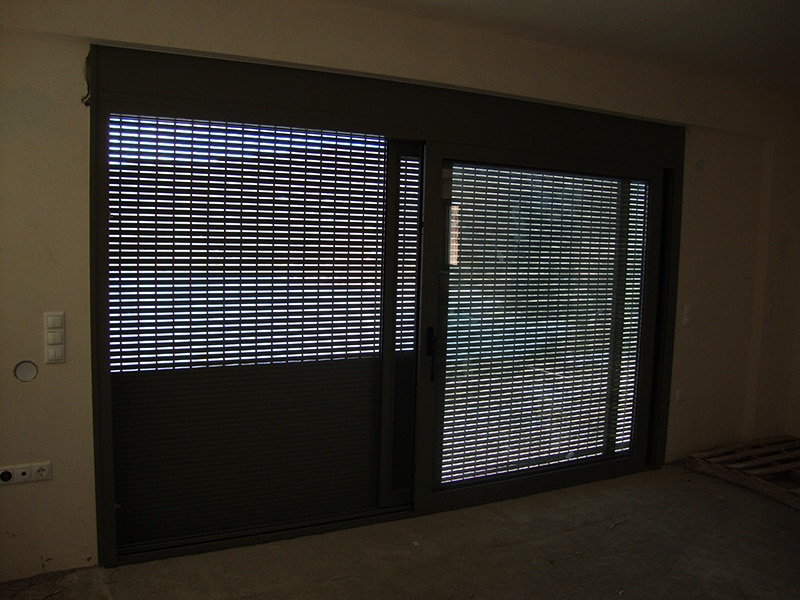
Many consumers and energy inspectors wonder what Uw,rb is, the Thermal Transmittance Coefficient with Roller Blind/External Cover in closed position, and Uw,corr, the Corrected Thermal Transmittance Coefficient of the frame.
Uw,rb is the coefficient that measures the thermal transmittance – thermal insulation of the frame, with the external cover (roller blind or shutter) in closed position.
The Uw,corr. of a frame is the thermal transmittance – thermal insulation coefficient that shows us the overall performance of a frame with both open and closed external covers. As mentioned above, the frame has different thermal behavior with the external covers (shutters or roller blinds) closed and different with the external covers open. The Uw corr. shows us the overall performance of the frame (an average) based on the TOTEE 20701 – 2/2017 standard.
See coefficients, types and certificates, download catalogs and watch videos of all energy-efficient aluminum frames