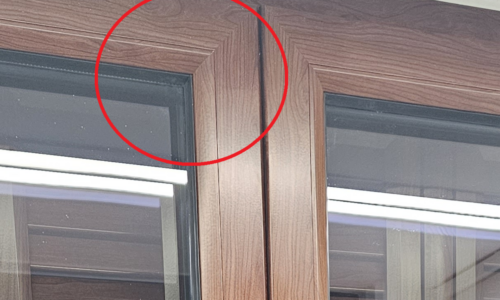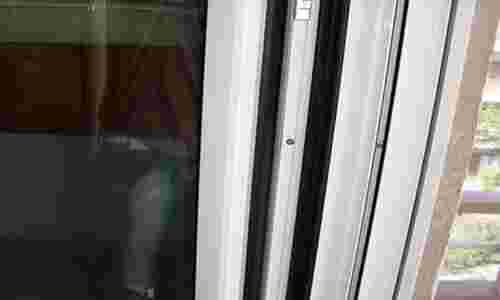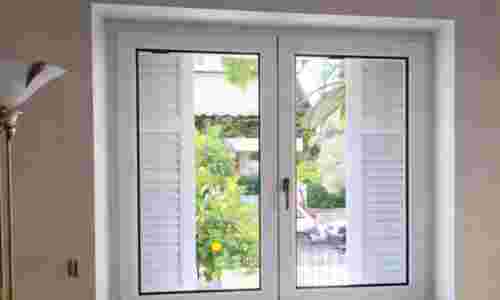









Thermal bridges are defined as points where the thermal resistance of building materials is reduced compared to other surfaces, and they are a significant cause of heat loss. They are visible to the human eye in the form of mold. They are not only observed at the junctions of frames with walls. But in this text, we will see how Fenestral avoids the creation of thermal bridges with a perimeter thermal break gasket in energy-efficient aluminum frames.
- The above gaskets or plastics are applied according to Europa’s technical specifications manuals
Avoiding thermal bridges with a perimeter thermal break gasket
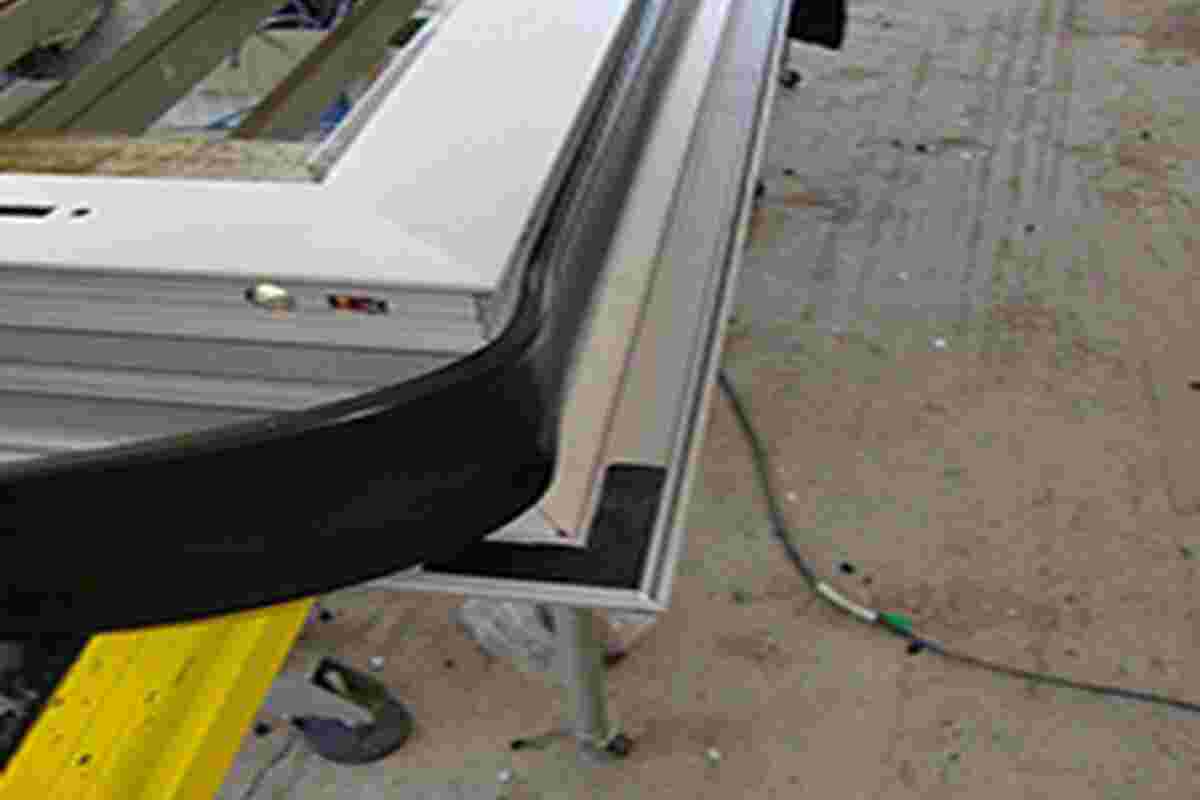
Fenestral installs a perimeter thermal break gasket or plastic spacers in all energy-efficient aluminum frames. The perimeter thermal break gasket or plastic installed is essential, as it prevents the formation of a thermal bridge (energy transfer) between the marble or plaster and the inner part of the frame. See more about the window gaskets we use.
See how energy-efficient aluminum frames prevent heat transfer
Energy-efficient aluminum frames prevent heat transfer from inside to outside and vice versa. Heat transfer is a natural phenomenon and always occurs from the body with the higher temperature to another with a lower temperature. So the problem of energy loss stems from the fact that in winter, heat is transferred from the frames to the outside because the natural phenomenon I mentioned earlier occurs. That is, the higher temperature of the house is transferred to the lower temperature of the external environment. In summer, exactly the same phenomenon occurs, but this time the higher temperature of the environment is transferred into the house, due to the natural phenomenon.
The double energy-efficient glass installed in energy-efficient aluminum frames has a metallic oxide coating on one side, and in this way, it prevents the transfer of temperature from inside to outside and vice versa (i.e., the internal temperature of the house is not transferred from the inner pane to the outer due to the metallic oxide coating to the outside and vice versa).
U-value and energy-efficient aluminum frames
See Fenestral’s products in energy-efficient casement frames and energy-efficient sliding frames and ask us about the U-value of our products. The U-value determines how easily heat passes through a material or layers of different or identical materials of a specific thickness within one hour per square meter. Fenestral installs a perimeter thermal break gasket in all energy-efficient frames.
In winter, for example, the temperature inside the house is 25 degrees Celsius, while the corresponding ambient temperature is around 10 degrees. How difficult it will be for heat to pass from inside to outside will depend on the thermal resistance of the frames (frames alone do not determine thermal transmittance, of course, but according to studies, frames affect 35% of thermal transmittance).
Choose energy-efficient aluminum frames
Energy-efficient aluminum frames have high thermal resistance; heat penetrates aluminum frames with more difficulty, resulting in the lowest possible losses and, naturally, energy savings. Thermal resistance is the opposite of thermal transmittance, meaning it shows how difficult heat transfer is. For aluminum frames, we want high thermal resistance and low thermal transmittance. As well as avoiding thermal bridges with the perimeter thermal break gasket.