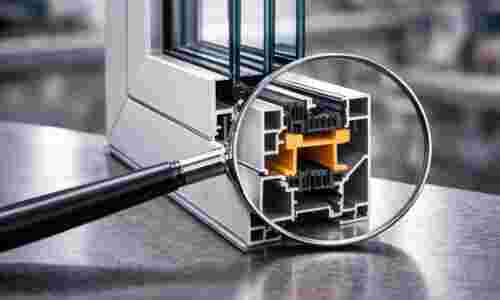














Thermal break frames are widely known in the market as energy-efficient aluminum frames. Essentially, what distinguishes thermal break frames from conventional aluminum profiles is the use of a special insulating material, usually polyamide, which does not allow significant energy transfer through the aluminum profile. This achieves high thermal insulation as well as sound insulation.
Thermal insulation in energy-efficient aluminum frames
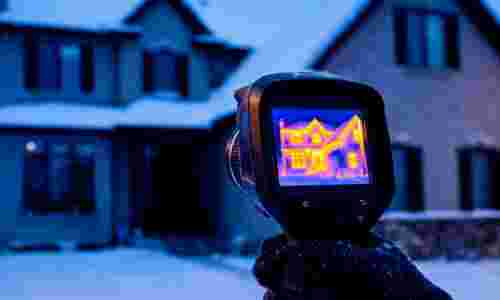
The thermal insulation of frames (thermal transmittance coefficient) is measured in W/m2K, and essentially this number defines the amount of heat (in Watts), per unit of time, that can pass through a frame with a surface area of 1m2, when the temperature difference between its two surfaces (inside – outside) is 1 degree (1°C).
Glazing in energy-efficient aluminum frames
Thermal break aluminum frames however, consist not only of the aluminum profile but also of the glass (glazing). These two materials, glazing and aluminum profile, have different coefficients (different thermal insulation – thermal transmittance). The thermal transmittance coefficient of the aluminum profile is called Uf (U Frame) and the coefficient of the glazing is called Ug (U Glass).
However, what truly helps us understand the thermal insulation of the frame is the Uw (U window) coefficient, which refers to the entire frame. (See in detail what the Uw thermal transmittance coefficient of frames is.)
Precisely because the glazing and the frame profile occupy different surface areas each time depending on the frame’s dimensions (bathroom window, balcony door, etc.), each aluminum frame manufacturer is obliged to state the thermal insulation coefficient (thermal transmittance or thermal conductivity coefficient) for each of your windows separately (legal obligation).
Benefits of energy-efficient aluminum frames
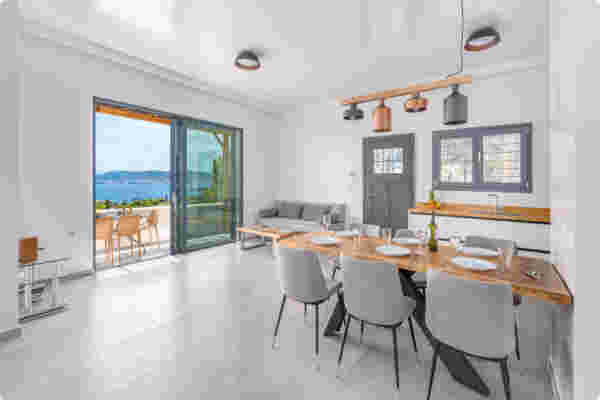
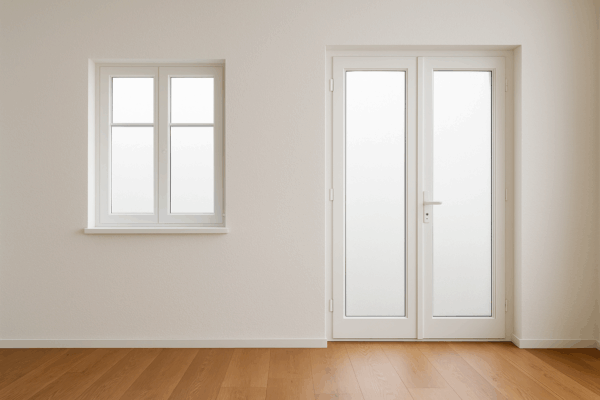
To better understand the benefit of replacing old frames with energy-efficient aluminum frames, we will give you an example. For a standard-sized hinged balcony door (1400 x 2200), the resulting difference is approximately 55%. See what you gain in total, in money and energy, from replacing frames with new energy-efficient frames…