










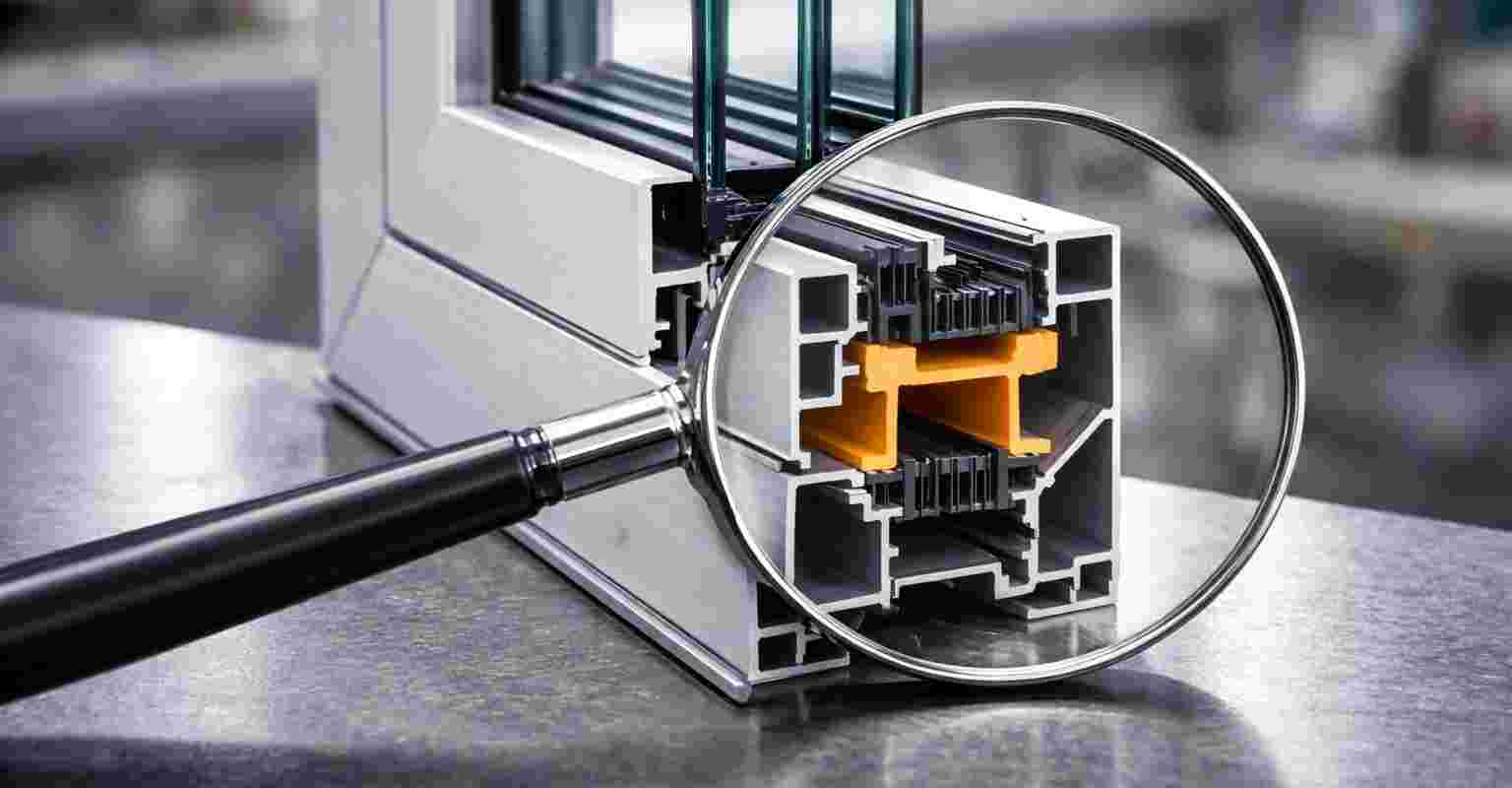
A question we are often asked is how to tell if my frames are energy-efficient – do they have thermal break (energy-efficient thermal break frames). First, to determine if our frames have thermal break, we need to explain exactly what thermal break is.
What is Thermal Break in frames – aluminum.
Aluminum, as a metal, is a good conductor of heat. This means that in winter, conventional aluminum frames allow the transfer of cold from the external environment to the interior of our home, and similarly in summer, the transfer of high temperatures. To prevent the transfer of heat and sound to and from our space, thermally broken aluminum frames are now manufactured. These are frames that contain special insulating materials inside their profile (usually the material is polyamide), which contribute to both the thermal insulation and the sound insulation of the frame (read more in our article what is thermal break in frames – aluminum).
How to tell if my casement frames are energy-efficient (do they have thermal break).
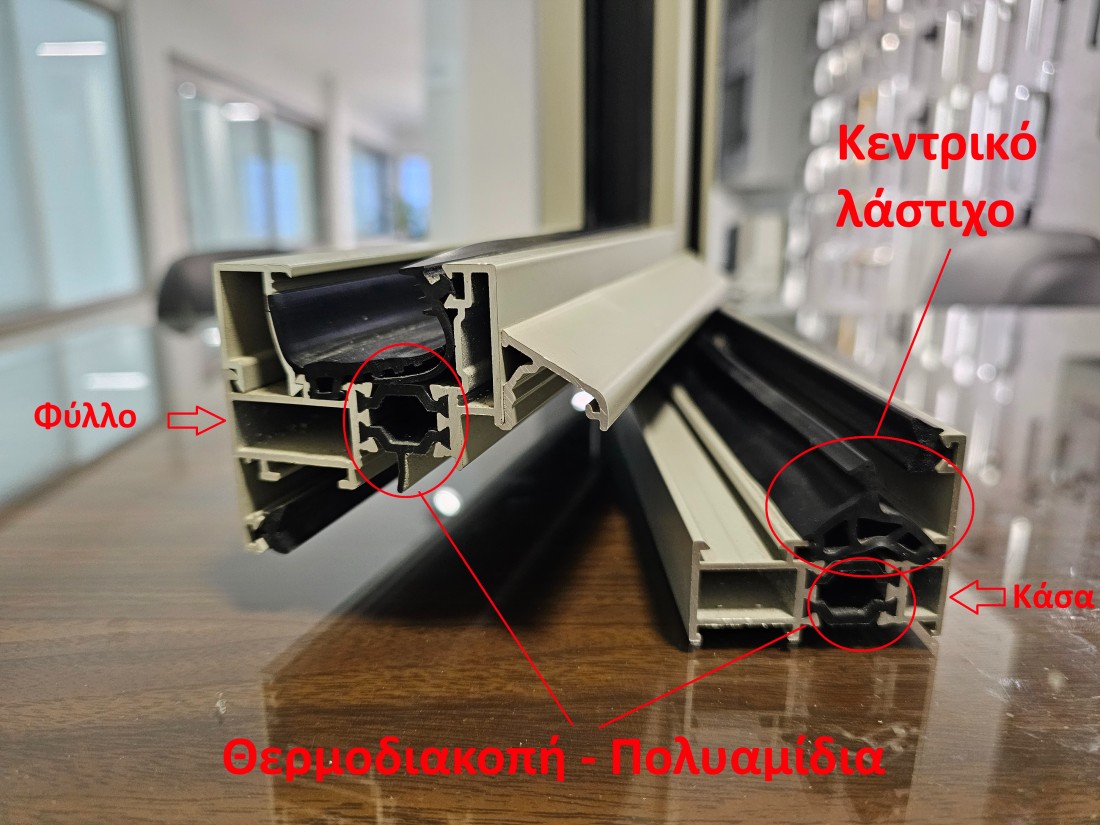
To determine if my casement frames are energy-efficient (have thermal break), we need to check if our profiles contain polyamides. As mentioned above, polyamides are plastics that are placed inside aluminum profiles and are usually black and located in the center of the aluminum profile. The problem with locating them is that, because they are painted along with the aluminum profiles, they take on the color of our frames (aluminum profiles). So, if our frames are grey, the polyamides – thermal break will have been painted the same color. To locate the polyamides and determine if our casement frames have thermal break (are energy-efficient), there are the following methods:
Method 1: looking at the sashes of the frame
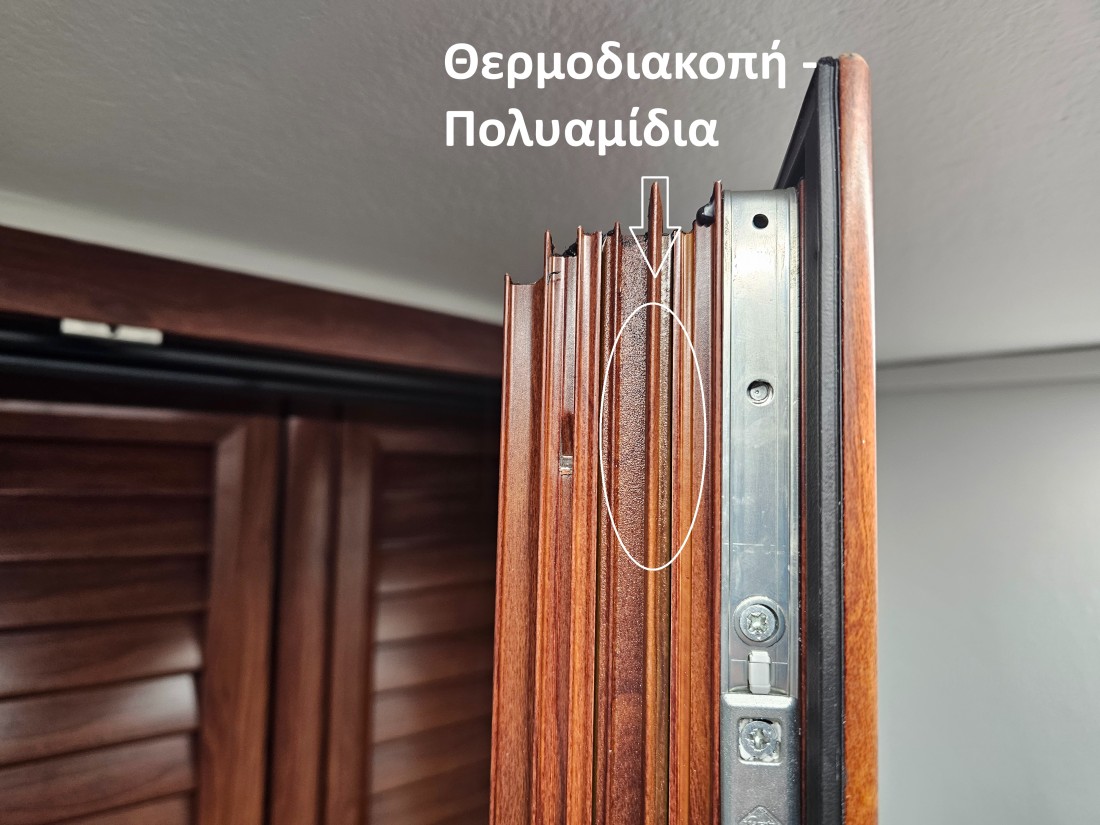
One place where we can look for polyamides (frame thermal break) to determine if our frames are energy-efficient – thermally broken, is to open the casement sash with the tilt function and look at its center (see photo). If the polyamide is painted, we should put our hand and try to feel if there is plastic (polyamide) in the center of the frame or not at the point shown in the photo.
Method 2: looking at the frame casing
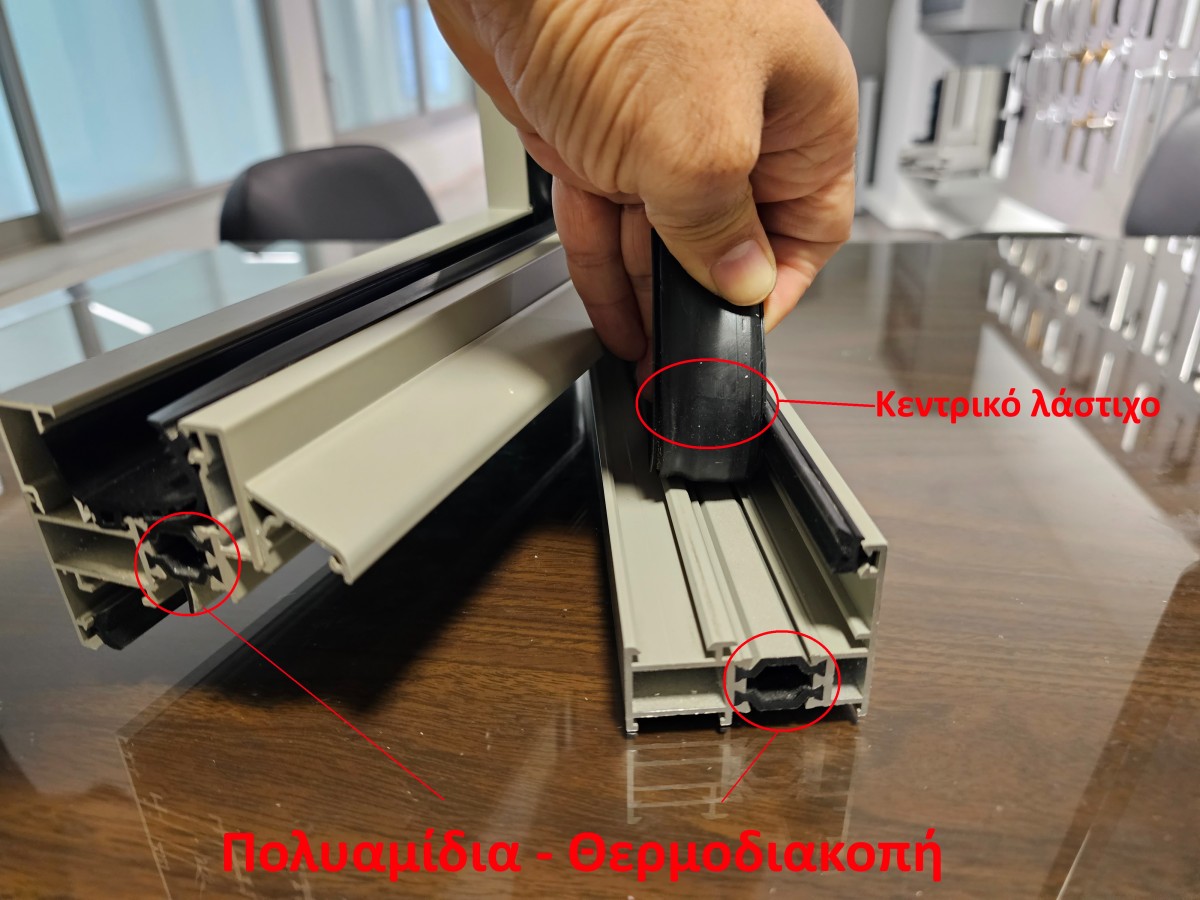
The second way to see if our aluminum frames are energy-efficient (have thermal break) is to look for the presence of polyamides – plastics in the frame casing. Polyamides in the frame casing are in most cases located under the central gasket of the frame. To check for their presence, we need to lift the central gasket of the frame (see photo) and look underneath it. If the polyamide (plastic) is painted, we should put our hand and try to feel if there is a plastic (polyamide) part under the gasket.
How to tell if my sliding frames are energy-efficient (do they have thermal break).
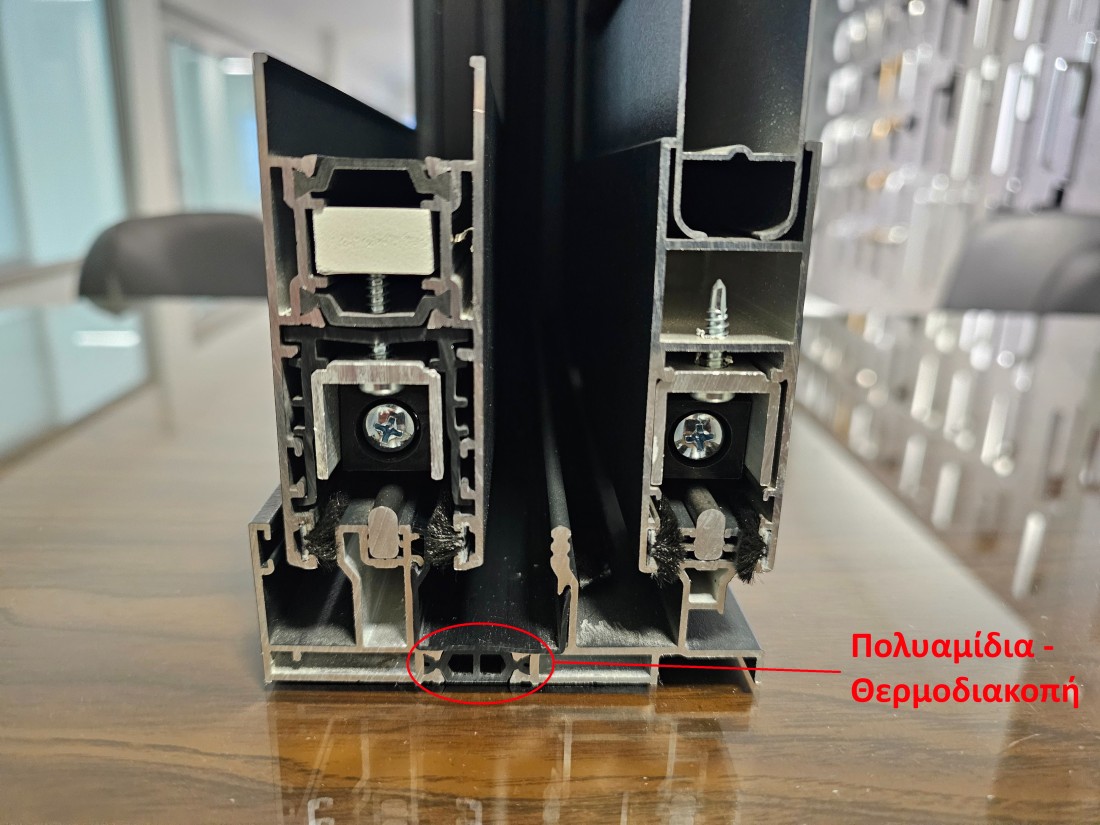
Let’s now see how to tell if my sliding frames are energy-efficient (have thermal break). As we said for casement frames, similarly for sliding frames, to determine if they are energy-efficient (have thermal break), we need to check if our profiles contain polyamides. Polyamides are plastics that are placed inside aluminum profiles and are usually black and located in the center of the aluminum profile.
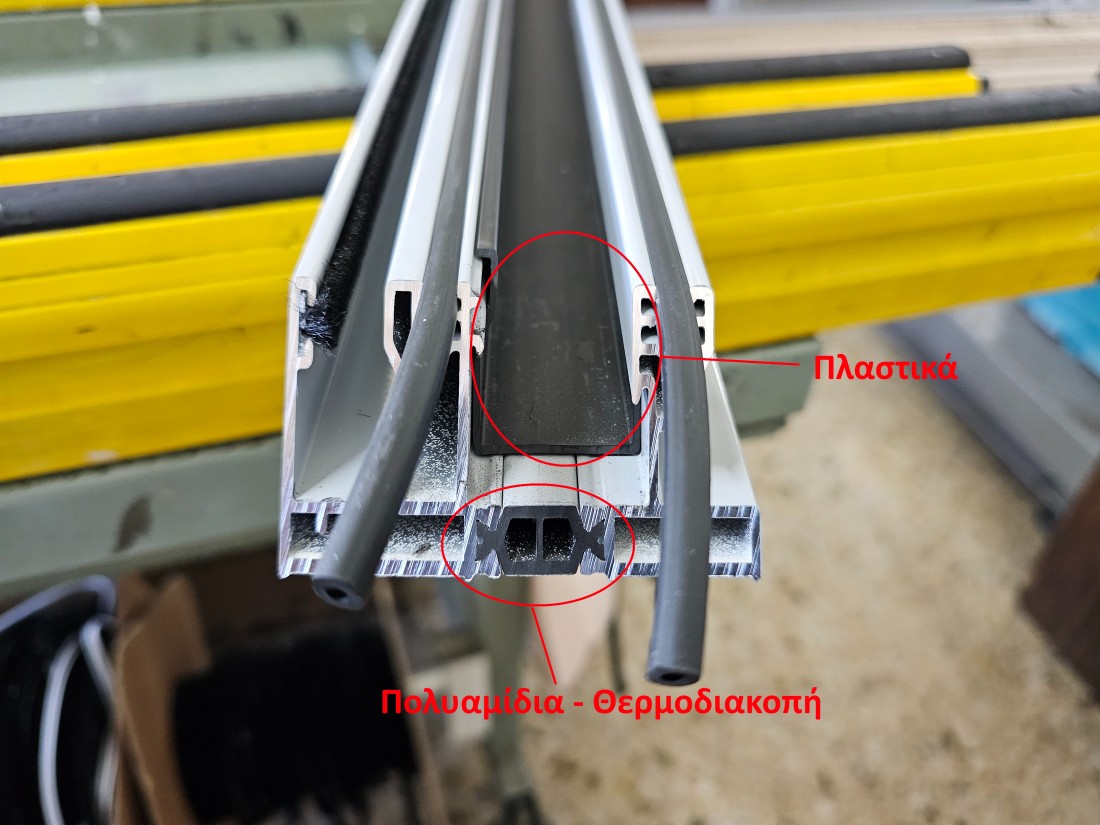
In the case of sliding frames, things are more difficult, as polyamides are usually covered by plastics. The presence of these plastics is an indication that our frames are thermally broken and energy-efficient. To ascertain this, we simply need to look at the guides of the sliding frames (e.g., at the bottom) and look for either plastics or polyamides.
If you want to see if your double glazing is energy-efficient, read our article how to tell if our glazing is energy-efficient