













An important aspect for both the security and aesthetics of frames is Alarms and Contacts in Frames. What types of alarm contacts exist, how are they secured, and where are the contacts placed in each type of frame? Who should install them, and what should we look out for? Let’s examine all the guidelines provided by frame companies.
Where Contacts are Placed Depending on Frame Type
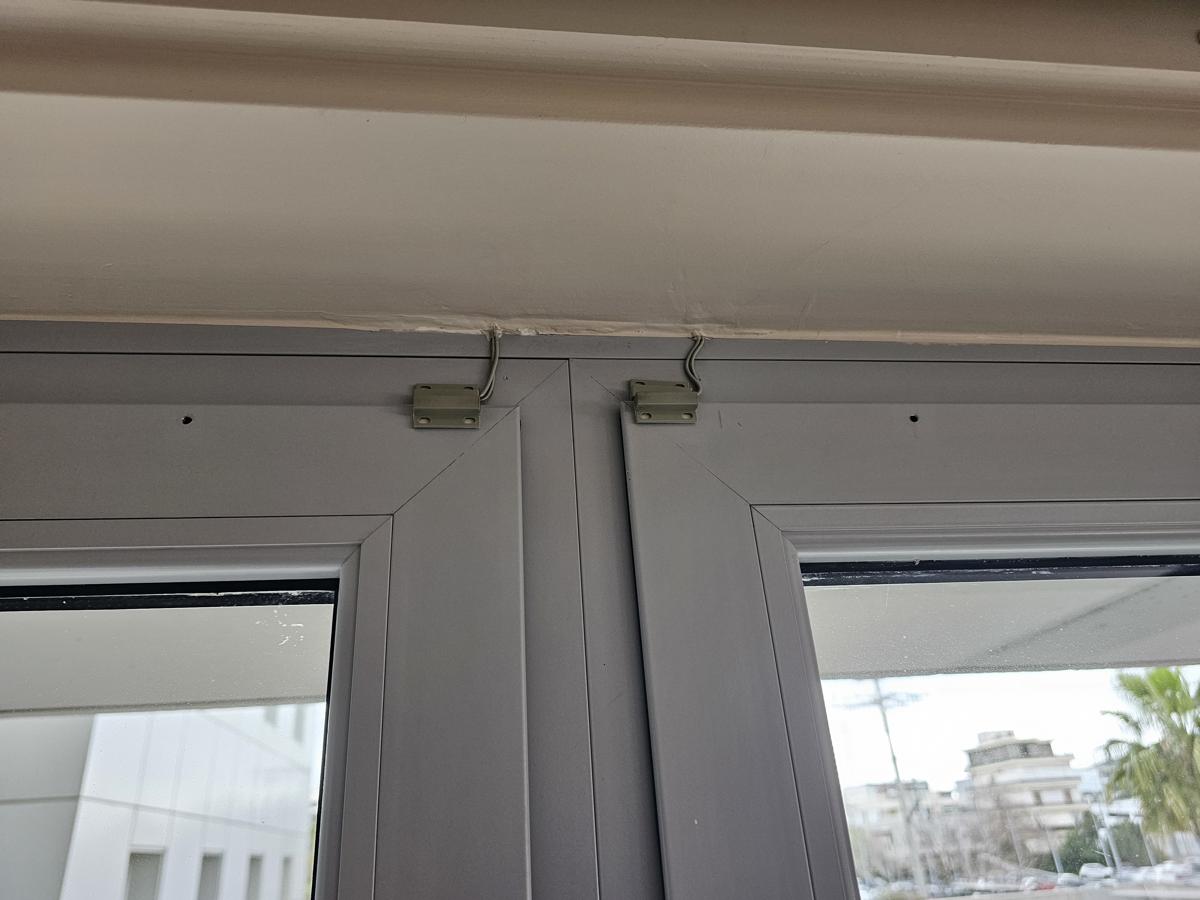
Alarm cables should ideally be routed inside the frames and not be visible, both for aesthetic reasons (cables on frame casings) and for the alarm’s proper functioning. Alarm traps can be installed either in the frames (casement or sliding) or in the external shutters (roller shutters or blinds), or in both for enhanced security. Frame design companies (e.g., Europa, Alumil), in their technical specifications manuals, provide clear instructions on where frames should be drilled and where alarm contacts should be placed to be functional and ‘hidden,’ as well as from which points the cables should pass through the frames.
Casement Frames and Alarm Contacts
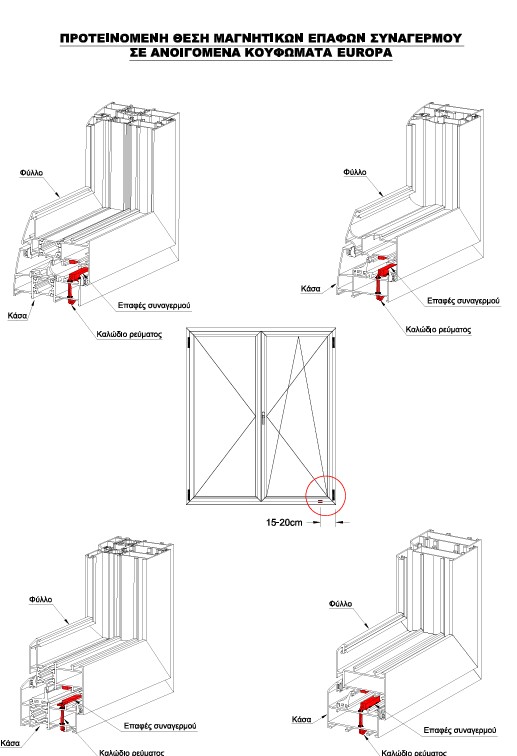
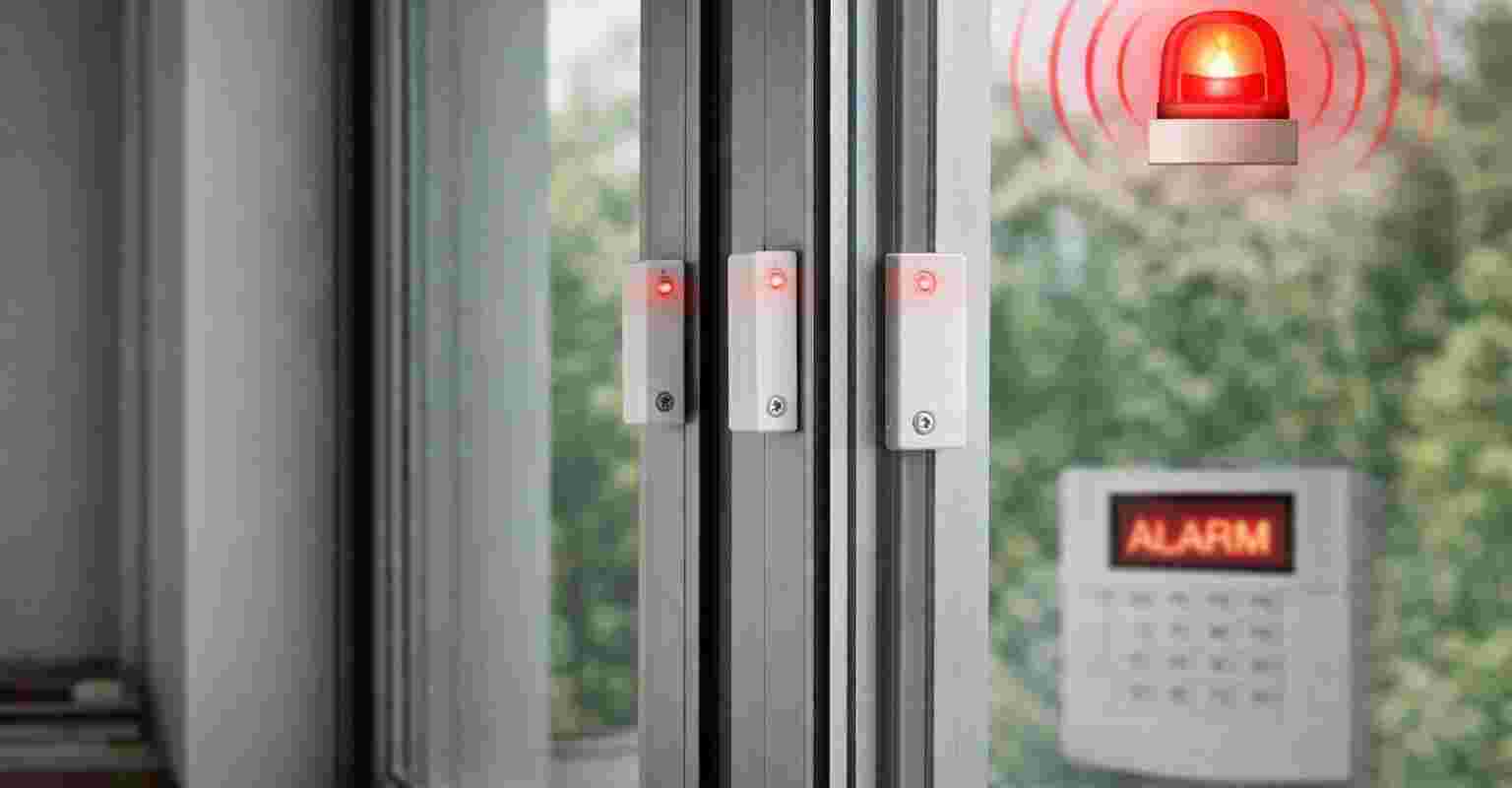
In casement aluminum frames for balcony doors and windows, magnetic contacts are placed inside the camera at the bottom of the frame casing and the sash that performs the tilt function, approximately 15 – 20 cm from the wall.
Entrance doors and kitchen doors
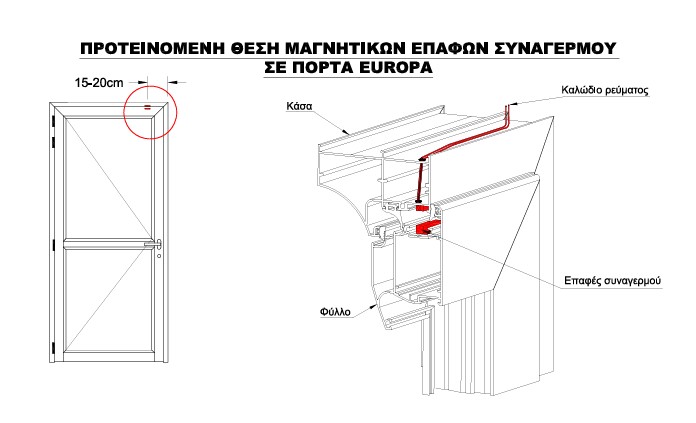
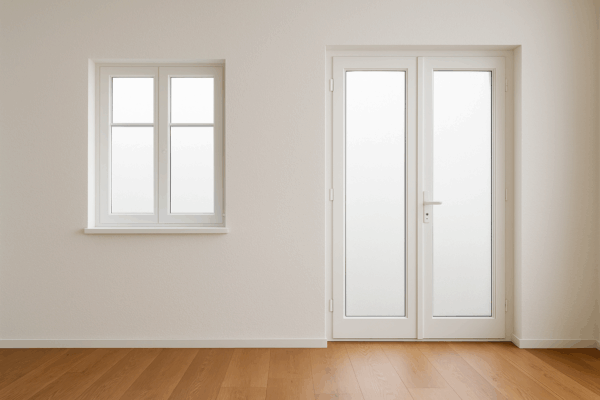
For entrance doors and kitchen doors, because these specific frames have a low threshold, magnetic alarm contacts are placed inside the camera of the upper horizontal casing, and in the upper horizontal part of the sash that holds the lock, approximately 15 – 20 cm from the wall.
Sliding Pocket and Lift-and-Slide Frames
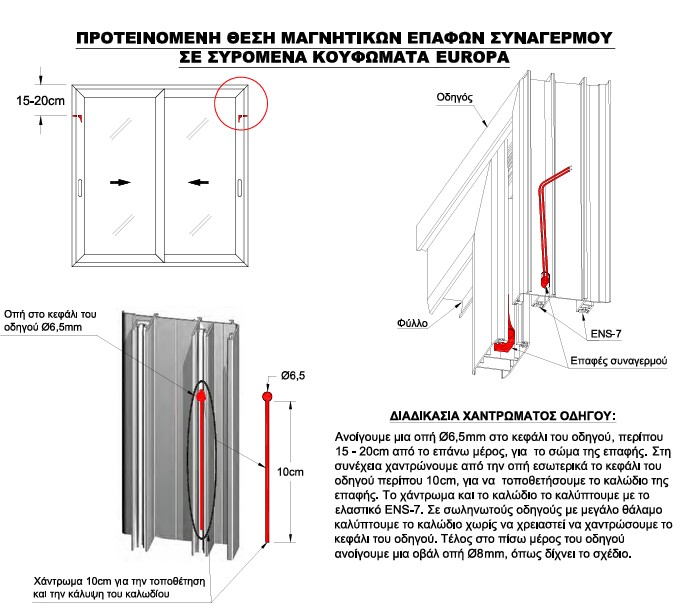
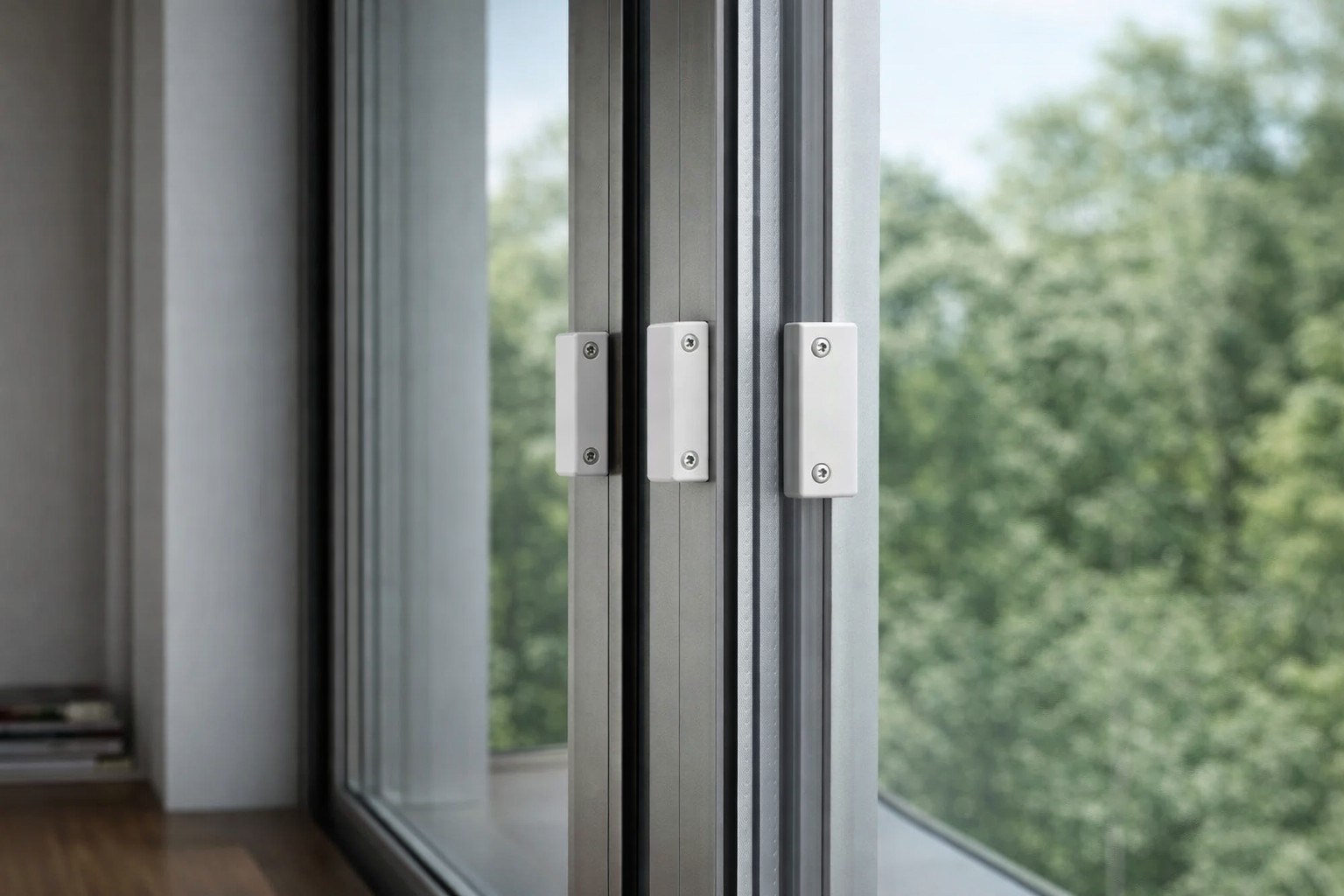
In all sliding pocket and lift-and-slide frames for balcony doors and windows, magnetic contacts are placed inside the vertical sides of the guides, approximately 15 – 20 cm from the upper horizontal wall. Pocket shutters for these frames are secured in the same manner.
Aluminum Roller Shutters
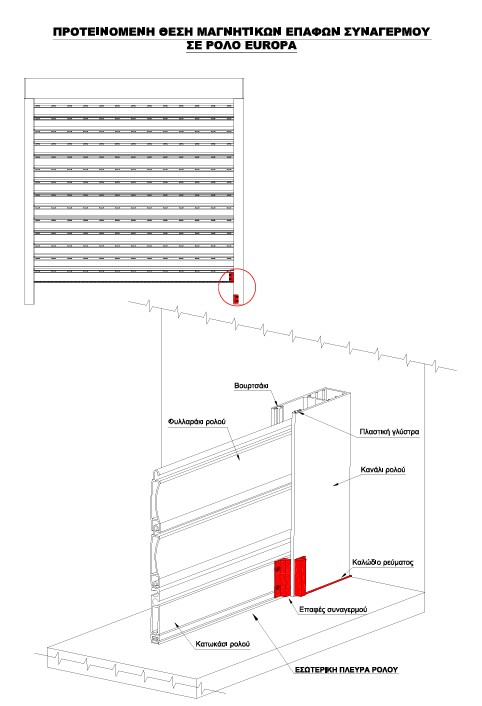
In aluminum roller shutters, alarm contacts are placed at the bottom threshold of the roller shutter as well as at the bottom part of their guide. Alarm cables pass behind or inside the guides, but not at the point where the slat moves, as there is a risk of entanglement.
Casement Shutters
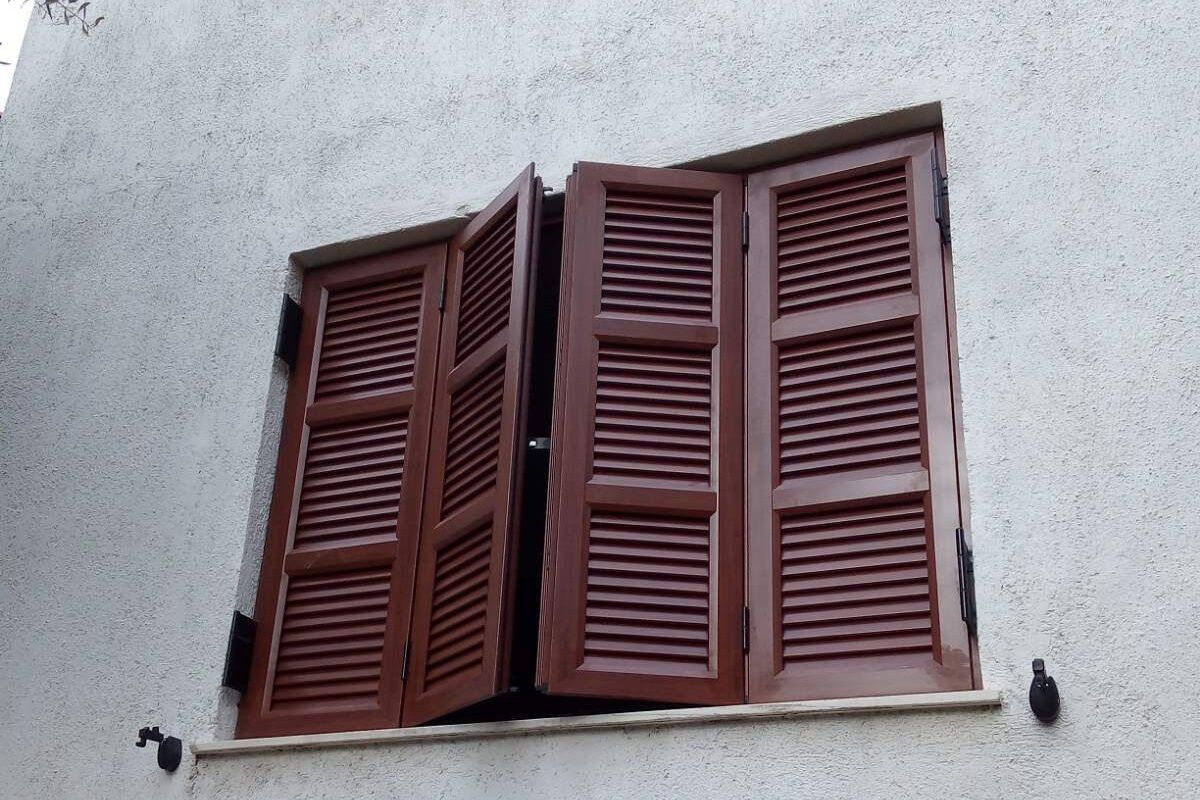
In casement shutters, alarm traps are installed as in casement frames, but at the top of the casing to prevent them from being dislodged. In the case of pocket shutters, the traps are placed as in sliding glass panels.
Who Installs Alarm Contacts and When
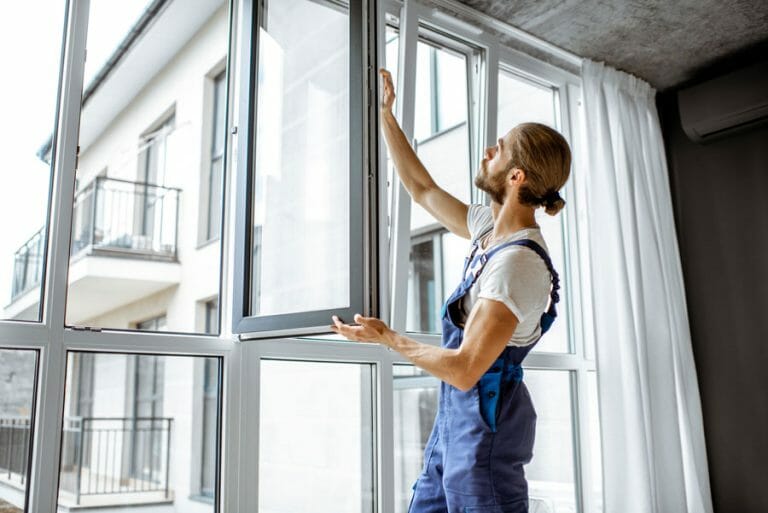
A long-standing problem with aluminum frames is who installs alarm contacts and when. It must be clarified here that aluminum frame manufacturers have neither costed the time required to install cables and contacts inside the frames (which can double the installation time of a frame), nor do they know the use and placement point of each contact (magnetic, wireless, anti-vibration), nor is it their job to do so. Therefore, the installation of frames should be done in the presence of the people responsible for the alarms (and who have been paid for it), so that the cables and then the alarm contacts are installed during the frame installation. This presupposes that the professionals responsible for installing alarm contacts and cables are present from the start and throughout the frame installation to ensure the proper functioning of the alarms. If this is not possible, aluminum frame manufacturers charge extra for these services and do not assume responsibility for any problems that may arise!
What to Look Out For Regarding Alarms and Contacts in Frames
• Cables should ideally be routed internally (inside) the frames, both for aesthetic reasons and for the proper functioning of the alarms.
• The installation of alarm cables and contacts should always be undertaken by the alarm technician, who has the knowledge, is compensated for it, and, most importantly, assumes responsibility for the proper functioning of the alarm (to prevent false alarms).
• The alarm technician should be present from the very beginning and throughout the frame installation.
• We should leave 15cm of cable for each contact to allow for contact replacement in case of contact
• Casement frames should be secured at the bottom of the tilt-and-turn sash so that the alarm is not activated when they are in the tilt position
• In all frames, it is advisable to secure both the glass panels and the external shutters.
• Cables in roller shutters should not be placed where the slats move.
• Alarm contacts are preferably recessed, inside the aluminum profiles, and should not protrude excessively.