








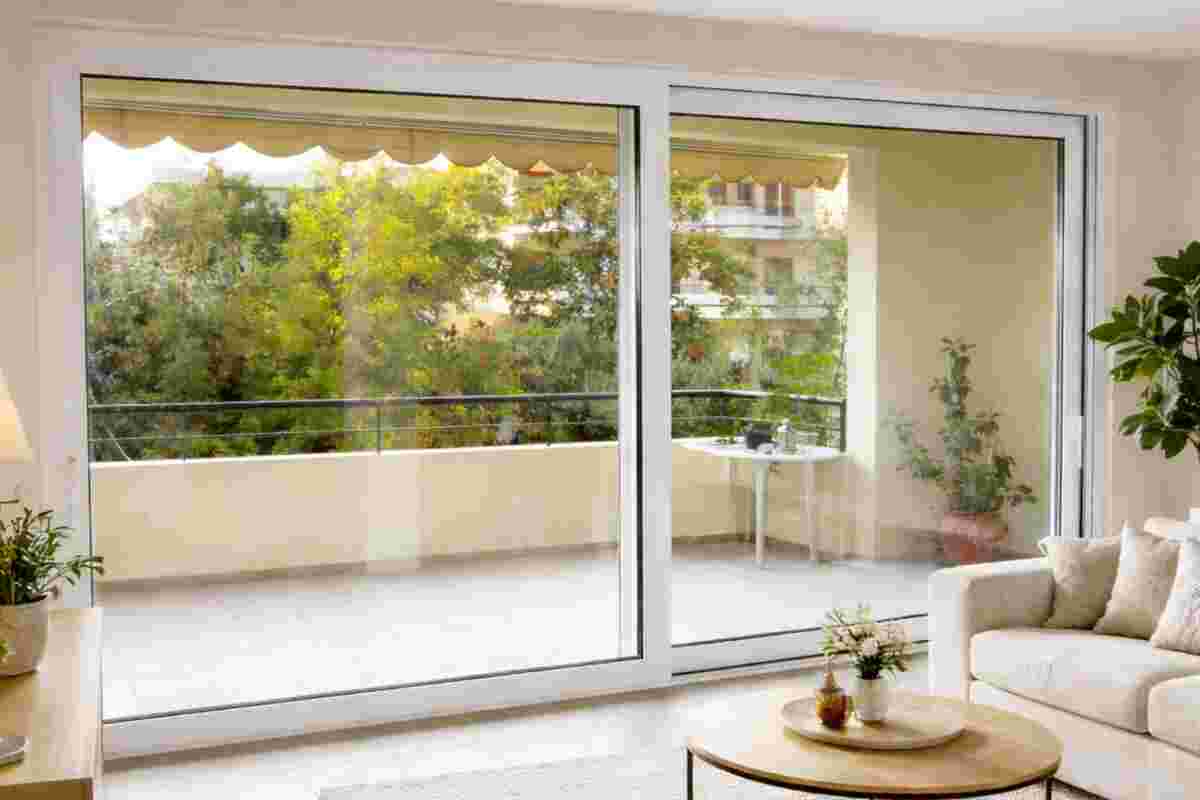
Lift-and-slide or simple sliding systems
A question that concerns many consumers is what kind of sliding frames (overlapping – recessed) to prefer: Lift-and-slide or simple sliding? In this article, we will look at the advantages and disadvantages of lift-and-slide systems compared to simple sliding frames, the required wall openings for installing recessed lift-and-slide frames, as well as the advantages and disadvantages of Vw (Volkswagen) type tilt-and-slide frames.
What are lift-and-slide systems?
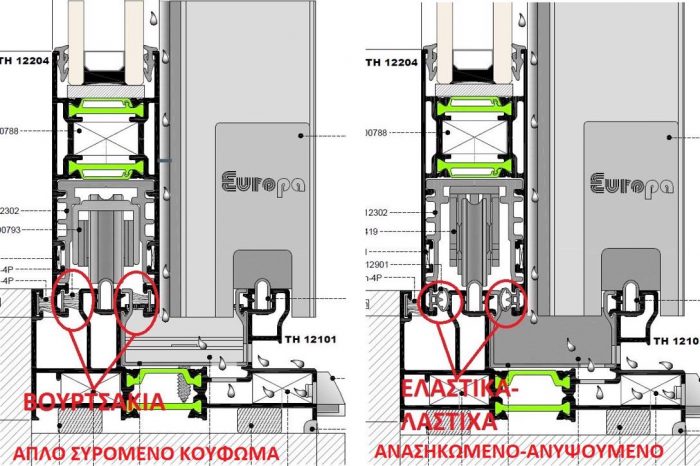
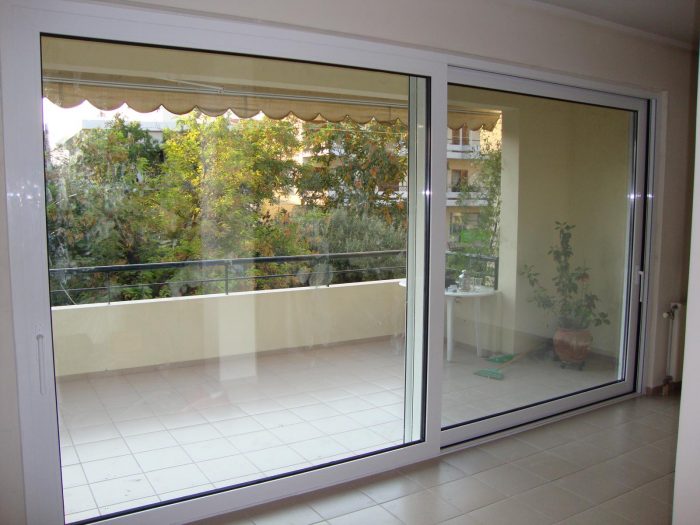
Lift-and-slide frames are sliding frames (overlapping or recessed) which, due to their special mechanisms (hydraulic lift-and-slide mechanisms), allow us to use rubber gaskets instead of brushes for their sealing (sound insulation, thermal insulation, watertightness, etc.).
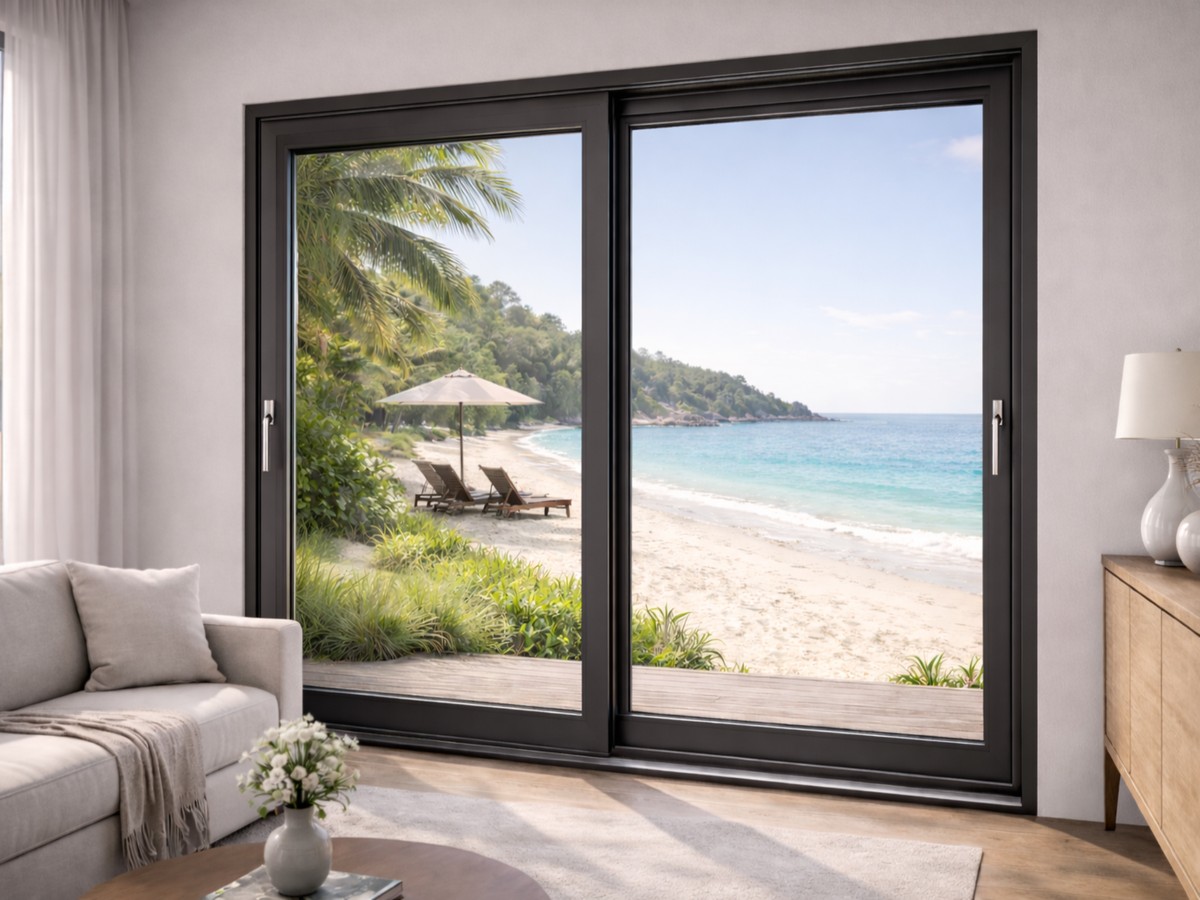
A long-standing issue with simple sliding frames is that they use brushes for thermal insulation and sealing. In lift-and-slide systems (overlapping or recessed), special hydraulic mechanisms are installed which, when the user attempts to open the sliding sash, slightly lift the sash. This movement allows us to use rubber gaskets for the sealing and insulation of the frame (airtightness, watertightness, thermal insulation, sound insulation, etc.). The reason is that when we close – lock the sliding sash, it secures – sits on the rubber gaskets it has. Lift-and-slide systems are commonly found in countries with increased demands due to extreme weather conditions (e.g., Germany, Sweden, etc.).
Advantages and disadvantages of lift-and-slide systems.
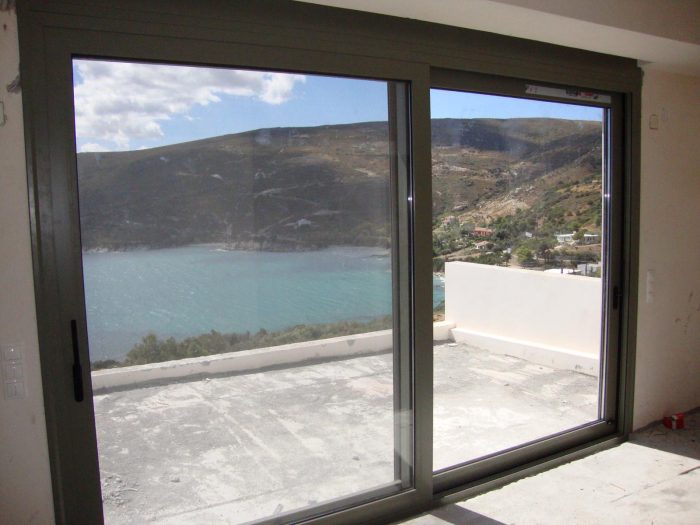
Lift-and-slide systems (overlapping or recessed) outperform simple sliding frames in most areas. Let’s look at the advantages and disadvantages of lift-and-slide systems compared to simple sliding frames (Lift-and-slide or simple sliding systems).
Advantages:
- Lift-and-slide aluminum frames (overlapping or recessed), due to the rubber gaskets they use, excel in all categories regarding thermal insulation, watertightness, air permeability, sound insulation, and security compared to simple sliding frames.
- With lift-and-slide aluminum frames (overlapping or recessed), we can construct frames of large dimensions (e.g., two-leaf overlapping frames 6 meters wide).

- In lift-and-slide aluminum frames (overlapping or recessed), all types of glass can be installed, even heavy glass panes (armored glass, Triplex, triple glazing, etc.), thanks to the hydraulic mechanisms they feature, which can support glass panes weighing up to 400 kg.
- Lift-and-slide aluminum frames (overlapping or recessed) feature sashes with glazing beads. These specific sashes with glazing beads allow us to shim the glass of the frames for their proper operation (see glass shimming – frame installation).
- The sashes with glazing beads that lift-and-slide systems feature allow the use of large gaps between double or triple glazing, to increase the sound insulation of the frames.
- The rollers that lift-and-slide systems feature provide greater durability over time.

- There is a mechanism for lift-and-slide frames that allows the sash to be slightly open (like tilt-and-turn) for ventilation of the space, without it being able to be forced open (burglary).
Disadvantages:
- Lift-and-slide frames are more expensive. The prices of lift-and-slide frames are generally higher than those of simple sliding frames (overlapping or recessed), due to the hydraulic mechanisms they feature. The prices of lift-and-slide frames are higher by €160 – €300 per sash, depending on the type of hydraulic mechanisms (200 kg, 300 kg, etc.). This practically means that a simple two-leaf overlapping frame (2 glass sashes – 2 lift mechanisms) is more expensive (frame prices) by €320 to €600. A single-leaf recessed aluminum sliding frame (glass – screen – shutter), due to its single glass sash (1 glass sash – 1 lift mechanism), is more expensive by €160 – €300 than a simple aluminum sliding frame.
- The handle of the lift-and-slide system is quite larger and bulkier compared to the simple sliding one, which many consumers consider unaesthetic.

- The aluminum profiles used, in many cases of lift-and-slide systems, are quite large – wide, because they are designed for large-dimension frame constructions. There are exceptions, with narrower profiles such as the E 34 lift-and-slide series.
- Lift-and-slide aluminum frames, due to the large width of their profiles, do not fit into the openings – tunnels of old apartment buildings (recessed frame openings), in cases of replacing recessed sliding frames. One of the exceptions is the ESS 34 lift-and-slide series, which can be installed in tunnels 9.5cm wide.
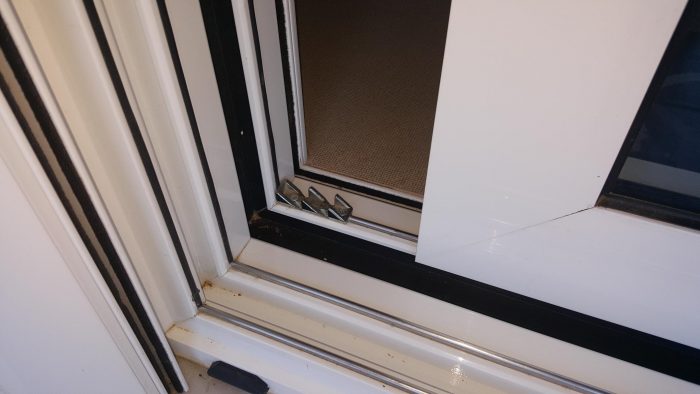
- Lift-and-slide frames, when constructed as recessed sliding frames, have brushes at the joint cover – sealing corner, like simple sliding frames (Lift-and-slide or simple sliding systems).
Openings (tunnels – holes) required for the installation of lift-and-slide systems.
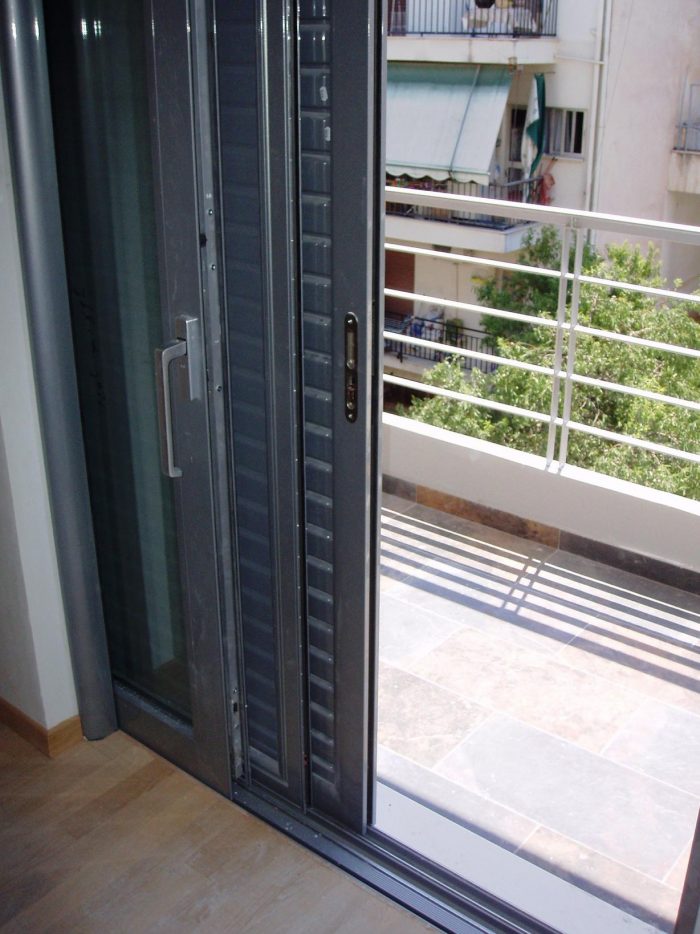
As mentioned above, a problem with lift-and-slide frames is that due to the large width of the guides and glass, they are difficult to install when replacing recessed aluminum sliding frames. Let’s look at what openings (tunnels – holes) are required for the installation of Europa’s recessed lift-and-slide systems.
- See the openings for the ESS-34 lift-and-slide series
- See the openings for the Europa ESS-47 lift-and-slide series
Vw – Volkswagen type tilt-and-slide aluminum frames
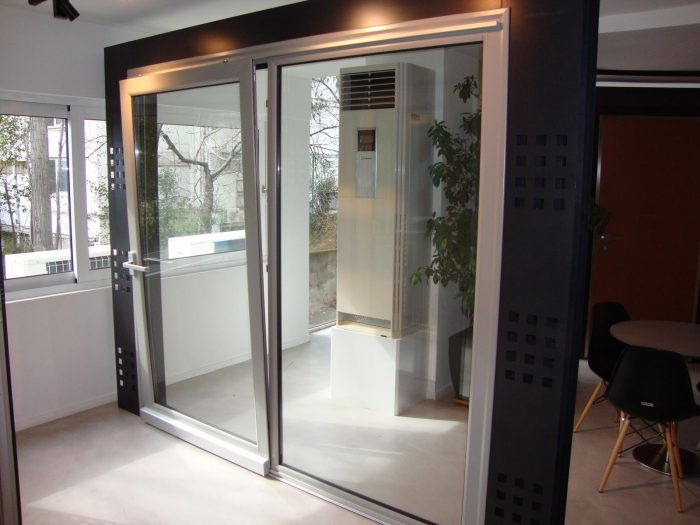
Vw – Volkswagen type tilt-and-slide aluminum frames are a solution mainly for the construction of overlapping sliding frames (not recessed). Let’s look at what Vw – Volkswagen type tilt-and-slide aluminum frames are, what their advantages are, and what their disadvantages are.
Vw – Volkswagen type tilt-and-slide aluminum frames, or lift-and-slide, are overlapping two-leaf sliding frames, which have one movable sliding sash and one fixed sash. The movement of the sliding sash is similar to the movement of the rear door of old Vw – Volkswagen vans, hence their name. The sliding sash of Vw – Volkswagen type frames, through a special mechanism, moves out of the frame’s casing and then slides over the fixed part – glass. The handle of the Vw – Volkswagen type frame (aluminum or PVC) has three positions: one position where the movable sash is closed, one where the sliding sash becomes tilt-and-turn (tilts), and one where the movable sash comes out of its casing and slides towards the fixed part – glass.
Vw – Volkswagen type tilt-and-slide aluminum frames (aluminum – PVC) have two main advantages (tilt function and perimeter locking mechanism) and several disadvantages. Let’s look at the advantages and disadvantages of these tilt-and-slide frames.
Advantages:
- Vw – Volkswagen type tilt-and-slide frames (aluminum – PVC) are the only sliding frames that have a tilt function for ventilating the space, like casement windows.
- Vw – Volkswagen type tilt-and-slide frames (aluminum – PVC) are the only sliding frames that have a perimeter locking mechanism, like casement windows, which ranks them quite high in terms of (classes of) thermal insulation, sound insulation, watertightness, airtightness, etc. Essentially, they behave like casement windows.
- Tilt-and-slide aluminum frames use rubber gaskets (not brushes) for their sealing, like lift-and-slide frames, which offer high performance in terms of thermal insulation, sound insulation, and sealing of the aluminum frame.
- In Vw – Volkswagen type tilt-and-slide frames (aluminum – PVC), large cross-section glass panes can be installed to increase their energy characteristics.
Disadvantages:
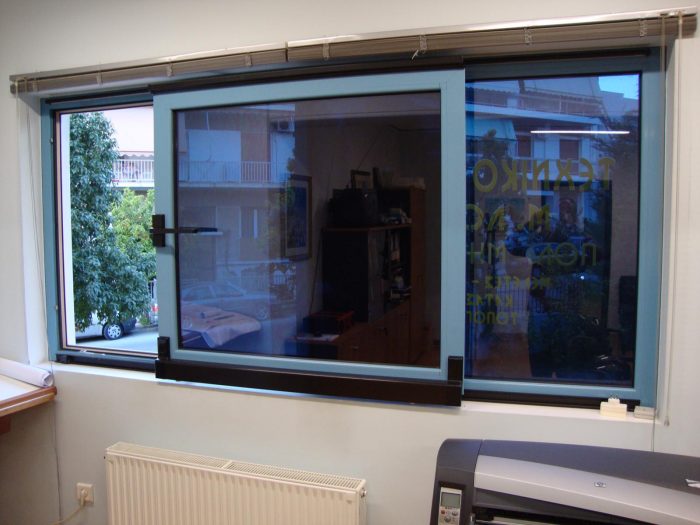
- Vw – Volkswagen type tilt-and-slide frames are two-leaf overlapping sliding frames, of which one part is always fixed.
- Vw – Volkswagen type tilt-and-slide frames cannot be constructed as three-leaf overlapping frames.
- Vw – Volkswagen type tilt-and-slide frames cannot be constructed as recessed sliding frames.
- The bottom sill of Vw – Volkswagen type tilt-and-slide frames is always visible and protrudes from the floor (cannot be recessed), with a height of approximately 6 cm.
- The handle of the Vw type sliding frame is quite larger and bulkier compared to the simple sliding one, which many consumers consider unaesthetic.
- In Vw – Volkswagen type tilt-and-slide frames, external shutters – blinds (not traditional shutters) are installed, which present great difficulty in cleaning them, in the part of the blind that is covered by the fixed glass pane. In case of screen installation, the difficulty becomes even greater.
- In Vw – Volkswagen type tilt-and-slide frames, there is difficulty in installing screens. Only vertical movement screens or Plisse type horizontal movement screens can be installed, not sliding screens, as in simple overlapping sliding or lift-and-slide overlapping frames.
- Vw – Volkswagen type tilt-and-slide frames cannot be installed in areas without external access or a balcony because the fixed part – glass cannot be cleaned.
Vw – Volkswagen type tilt-and-slide frames are made from aluminum or PVC profiles, which are used for the construction of casement windows. See series of Vw – Volkswagen type tilt-and-slide frames.