












Aluminum frames, especially in homes near the sea (e.g., coastal frames) , in high-altitude constructions (mountainous areas), or on busy roads, often become dull. This doesn’t always mean the frame or paint is damaged. Sometimes it’s just superficial dirt. Aluminum restoration is usually done with gentle cleaning, warm water, a soft cloth, and, where necessary, white vinegar or a special aluminum cleaner. The important thing is to first understand what caused the dullness: salt, dust, exhaust fumes, oxidation, or paint deterioration? Other times, however, the appearance indicates deeper damage that cannot be resolved by cleaning alone. Let’s put them in order.
Why does aluminum become dull?
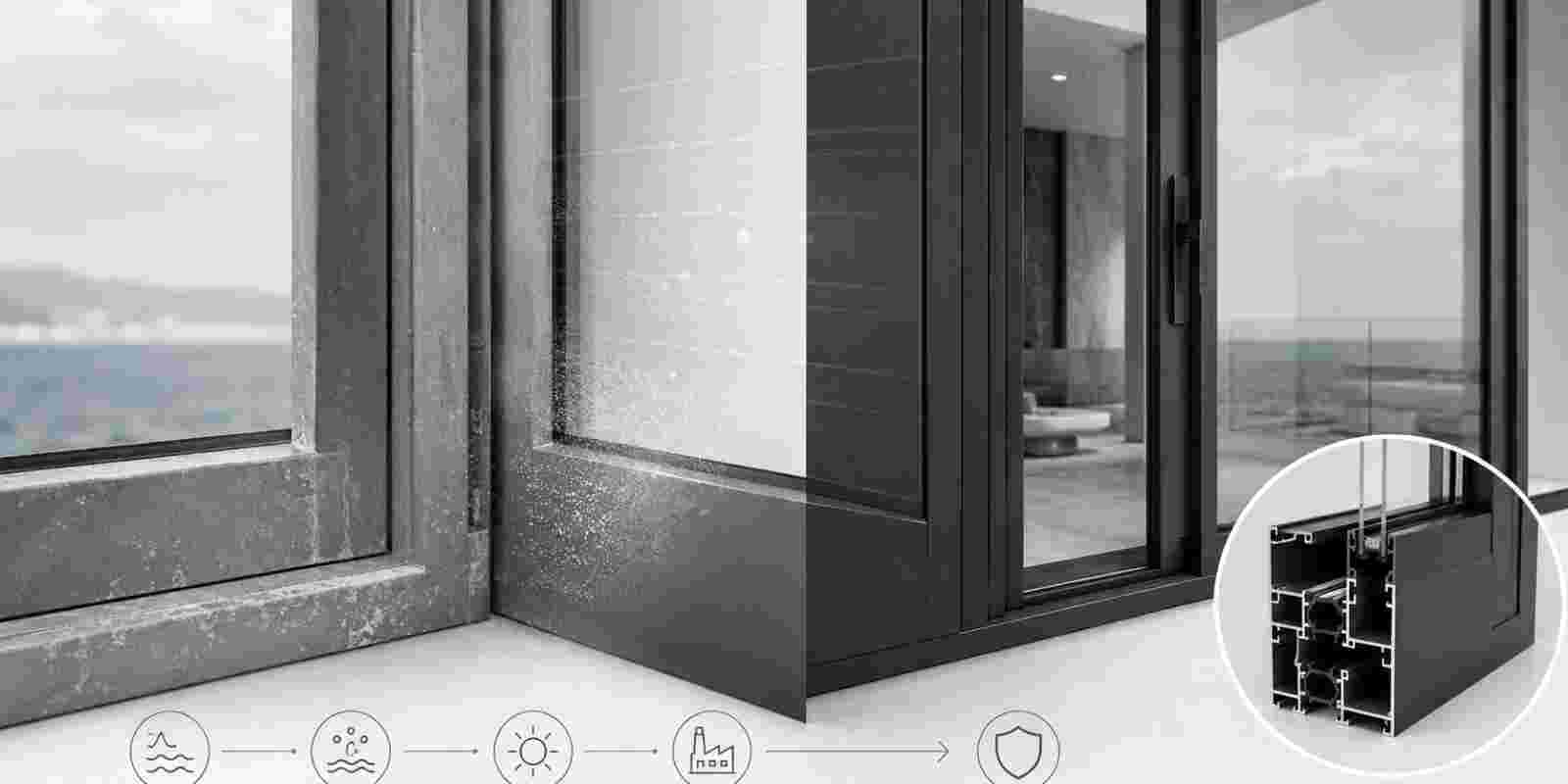
Aluminum becomes dull when dirt, salts, moisture, or atmospheric microparticles accumulate on its surface. In coastal areas, salts settle more easily on the frames. In urban areas, the problem is usually dust, exhaust fumes, and grime from the road.
There is also the case of oxidation or paint damage from intense sunlight and UV radiation. PVC frames are usually the first victim, with wooden frames and aluminum frames following. Intense sunlight can damage the paint. Then the surface may appear gray, dull, or “tired.” If the aluminum is electrostatically painted, the dullness may be due to either dirt on the paint or gradual deterioration of the paint itself. That’s why we do not start directly with strong cleaners. First, we need to assess the situation.
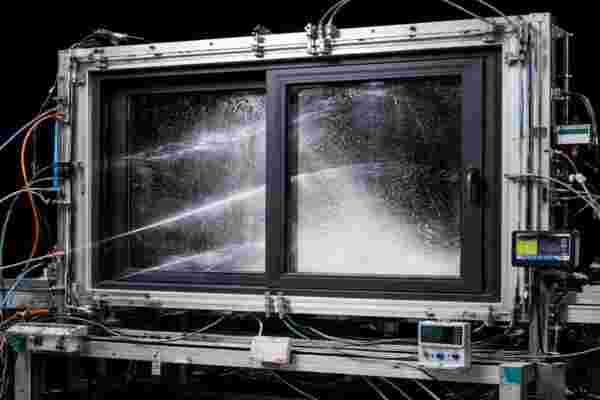
See how paint resistance to intense sunlight is checked with the certification of frame paints.
Before cleaning: what kind of dullness do you see?
A quick check helps avoid mistakes.
- White spots or stains: Most likely salt deposits.
- Gray dullness: This could be oxidation or accumulated atmospheric pollutants.
- Blackening: If you see it, especially on the exterior side of the frame, exhaust fumes, dust, or nicotine are usually to blame.
- Bubbles, peeling, fading, or discoloration: Then the problem is probably not simple dullness and has to do with the paint. In this case, cleaning may slightly improve the appearance, but it will not fully restore the surface.
- Discoloration: then the problem is definitely with the paint
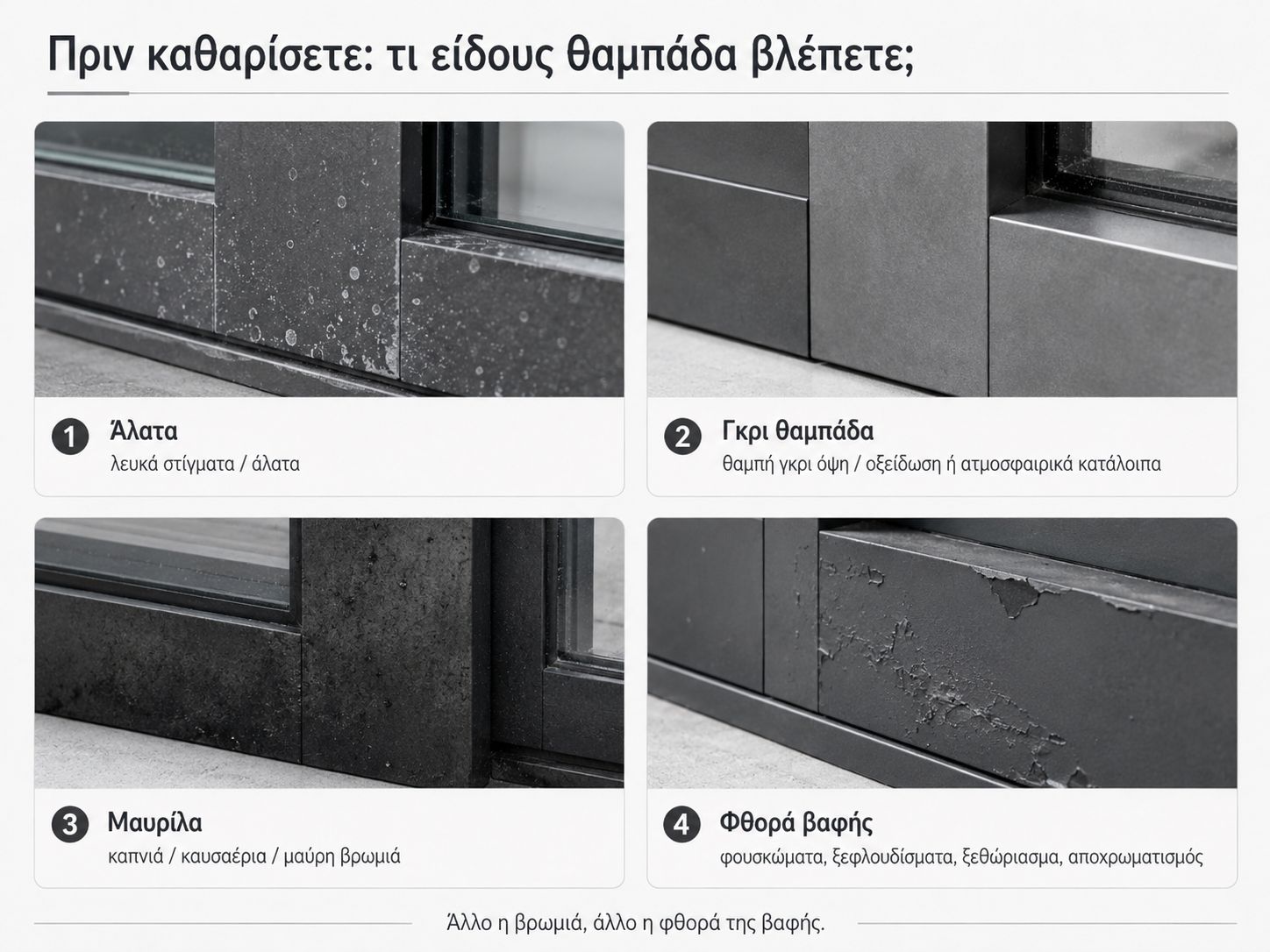
See all cases of paint problems (discoloration, filiform corrosion, scratches, pimples, fading, etc.) in our article aluminum frame paint problems.
The safe method for aluminum restoration
Always start with the mildest solution. Especially when it comes to aluminum frames, aggressive scrubbing is not needed.
First, remove dust
Wipe the surface with a dry or slightly damp microfiber cloth. Do not rub hard if there is dust or dirt, as small particles can scratch the paint.
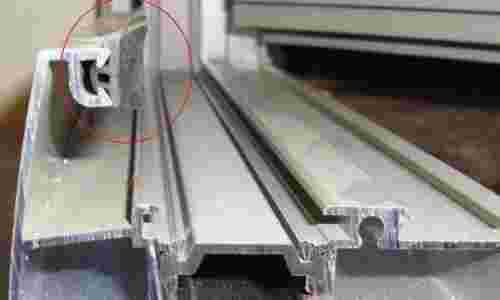
Pay attention to corners, seals, and tracks. That’s where most dirt usually accumulates.
Wash with warm water and mild soap
In a container, put lukewarm water and a little mild liquid soap (prefer neutral cleaners). Wipe the surface with a soft cloth or soft sponge. Avoid harsh brushes, kitchen scourers, and abrasive sponges.
In practice, this step is sufficient for many aluminum screens that appear dull simply because they haven’t been cleaned in a while.
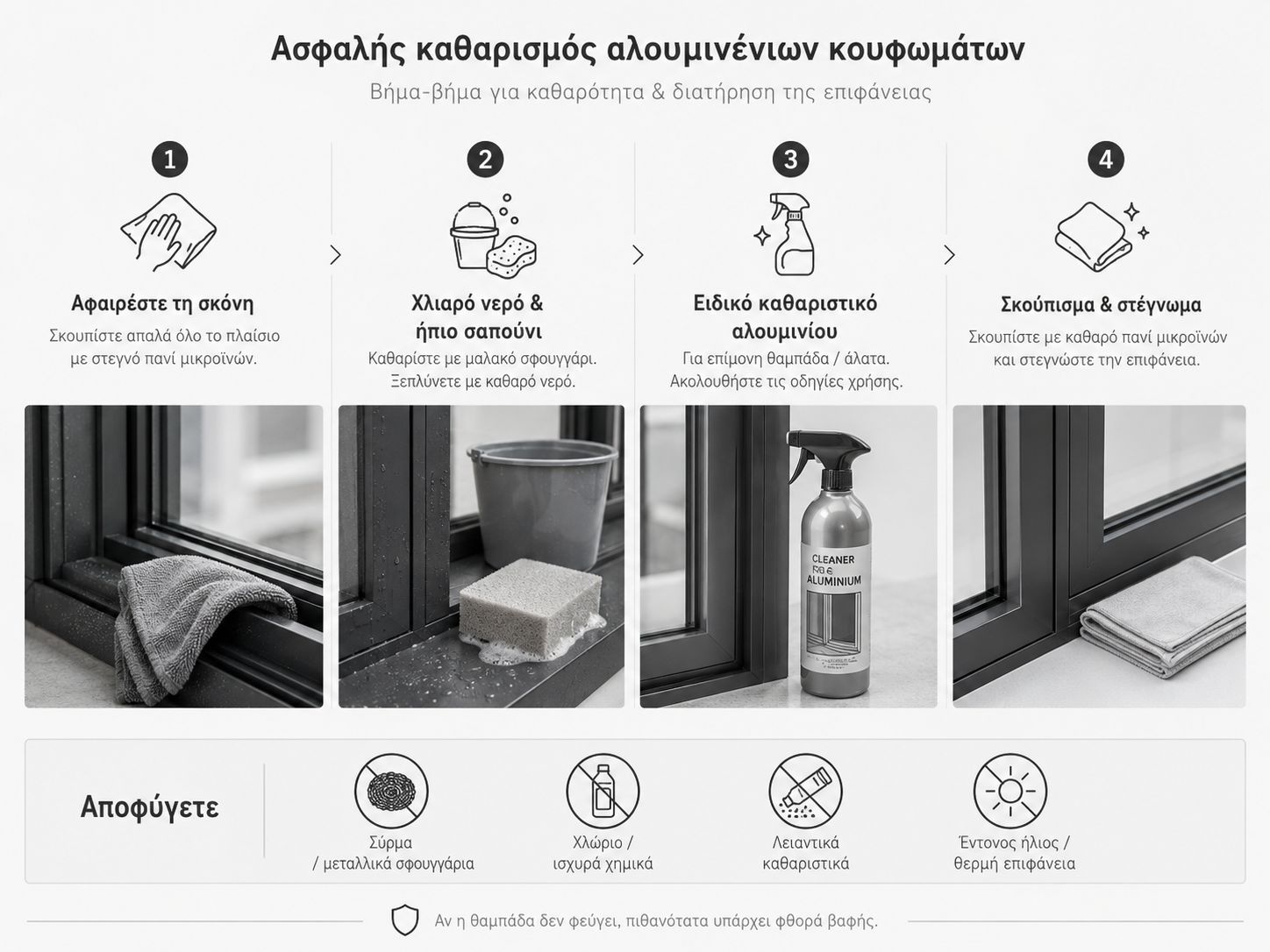
Prefer a special cleaner for salt and stubborn dullness
If there are salt deposits or the dullness persists, the most suitable solution is a neutral special aluminum cleaner. Caution is needed here: read the product instructions and ensure it is suitable for electrostatically painted or anodized surfaces, depending on the type of frame.
Do not mix different cleaners together as this increases the risk of damaging the surface. If the dullness does not come off with these, it means the paint and frames have been damaged. To prevent this, we must always follow the cleaning instructions.
What to avoid
The biggest mistake in aluminum restoration is excessive scrubbing. Aluminum, especially when painted, does not require aggressive treatment.
Avoid:
- kitchen scourers and harsh brushes
- bleach and very strong chemicals
- cleaners with granules or abrasive action
- cleaning in strong sunlight
- cleaning when the surface is very hot
- repainting frames with a brush
Ideally, clean in the morning or evening, when the temperature has not risen from the sun. This way, the cleaner does not dry quickly on the surface, and you work more controllably.
When restoration is not enough
If the aluminum merely looks dull, cleaning can significantly improve its appearance. However, if there are signs of damage, the problem may be different.
Technical inspection is required when:
- the paint has bubbled or is peeling
- the color has faded significantly
- the frame does not close properly
- there are worn seals or brushes
- air or water is passing through
- the dullness returns immediately after cleaning
In these cases, cleaning only addresses the symptom, not the cause. Maintenance, repair, or, for older frames, an assessment for replacement may be necessary.
How to keep frames clean for longer
The best way to prevent aluminum from frequently becoming dull is regular care. Nothing complicated is needed. A simple cleaning with mild soap and water, a few times a year, helps a lot.
In areas with intense sunlight, it is necessary to choose super-durable paints that are 3 times more resistant than standard ones. This way, the frames last longer without becoming dull. Also, in these areas, it is better to choose companies with Sea Side Class certification. Europa offers free Sea Side Class 2 certification for all its frames. See in detail all paint problems and what to look out for.
Don’t forget the tracks, seals, and mechanisms. A frame may look clean externally but be difficult to use because dirt has accumulated in the operating parts.
In conclusion, aluminum restoration can significantly improve the appearance of frames when the problem is superficial. However, when there is damage, difficulty in closing, or loss of watertightness, cleaning is not enough.
See useful Q&A for all topics, as well as how to repaint our aluminum frames