





Frames are perhaps the most important construction element of a house, as they affect its energy performance (thermal insulation, sound insulation, watertightness, etc.) more than anything else. Therefore, one must be particularly careful when choosing the appropriate type of frame to install. The types of frames are determined by their construction material (aluminum frames – PVC), their opening method (casement, sliding, etc.), and the presence or absence of thermal break and energy-efficient glazing (simple/cold frames – thermal break/energy-efficient frames). The security offered by aluminum frames, their resistance to weather conditions, and their performance are factors that must be considered before deciding on the appropriate type of frames for our home. For this reason, special emphasis should be placed on the technical characteristics and coefficients of the frames, as these define their performance.
Types of Frames by Opening Method
Frames, depending on their opening method, are divided into casement, sliding, and fixed.
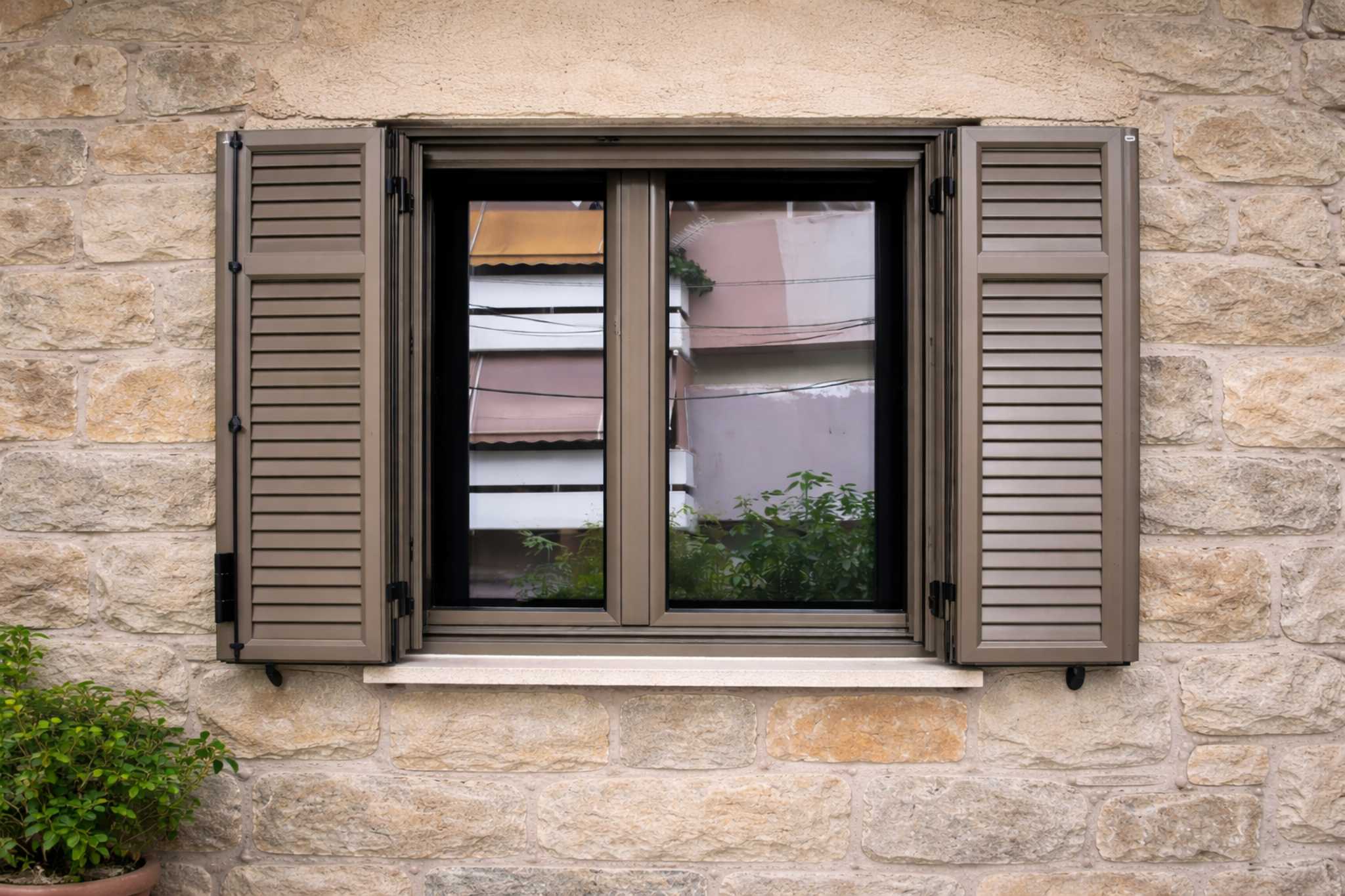
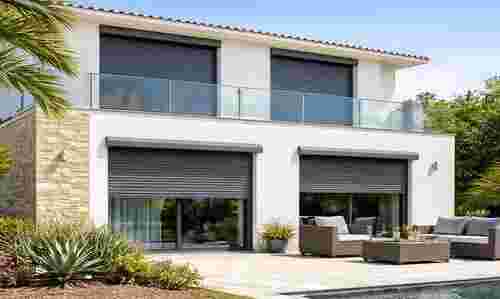
Casement frames have better quality characteristics (thermal insulation, sound insulation, watertightness, security) due to the perimeter mechanisms and gaskets they use. They also include tilt-and-turn functionality and are compatible with all types of external covers (shutters, blinds). They do, of course, require more space, as their sashes open inwards, and they are also more expensive; however, the advantages they offer justify their cost.
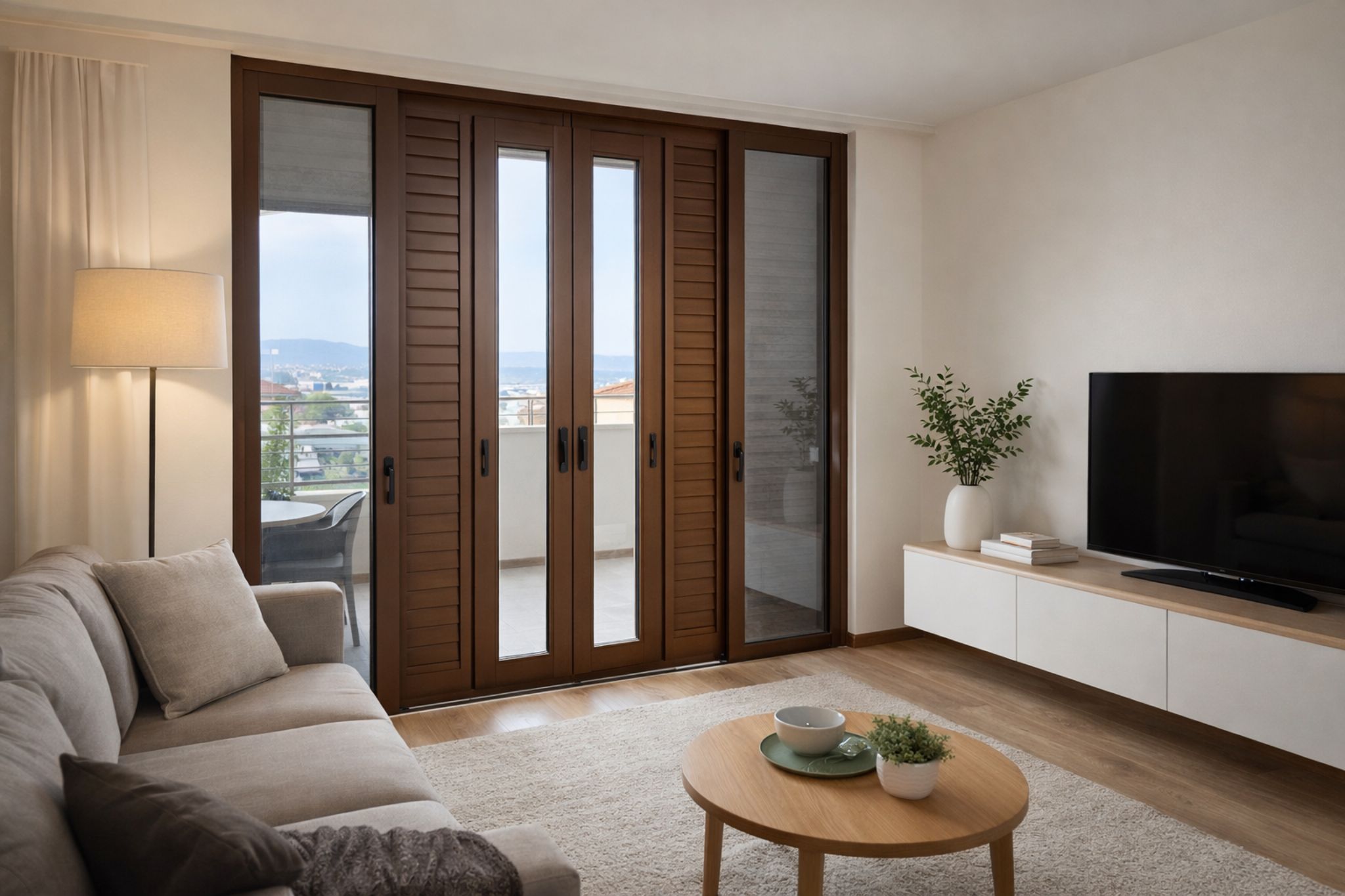
Sliding frames are divided into overlapping (where their sashes move parallel to each other) and pocket (where their sashes slide into an opening within the wall). They do not require large spaces, can be manufactured in large dimensions, and also have larger glass surfaces and smaller aluminum surfaces. They are inferior in terms of quality characteristics compared to casement frames, but with an additional cost of approximately 180 euros per sash, they can be manufactured as lift-and-slide (see the difference between simple sliding and lift-and-slide), where their quality characteristics approach or even exceed those of casement frames, due to the use of gaskets for their insulation.
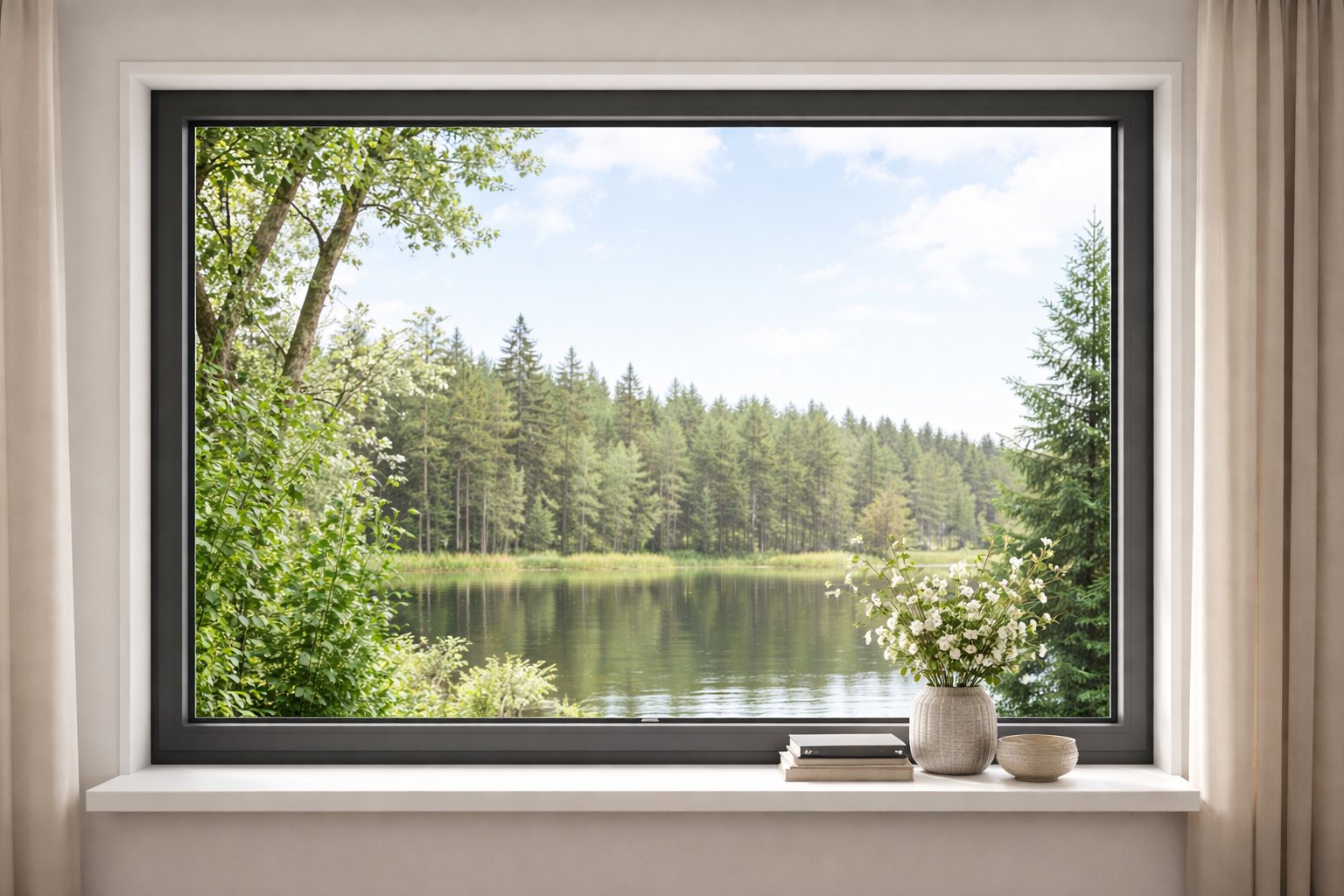
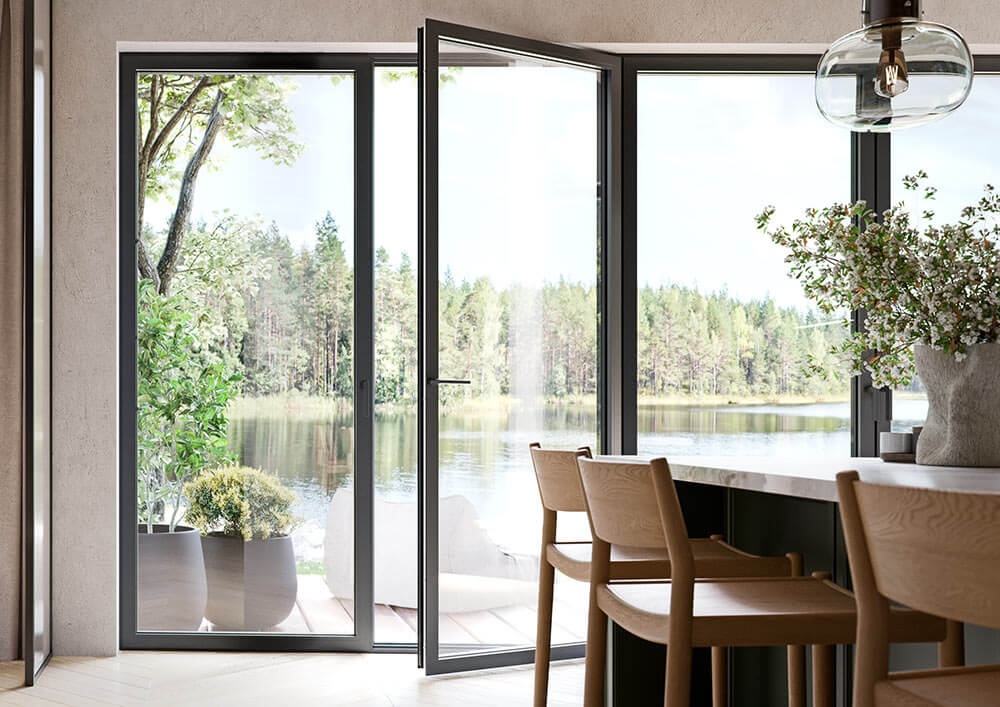
Fixed frames are used in areas where we want ample light and an unobstructed view. They are mainly found in shop windows and small bathroom windows.
See all types of frames by opening method (pivoting, parallel sliding, etc.)
Types of Frames by Construction Material
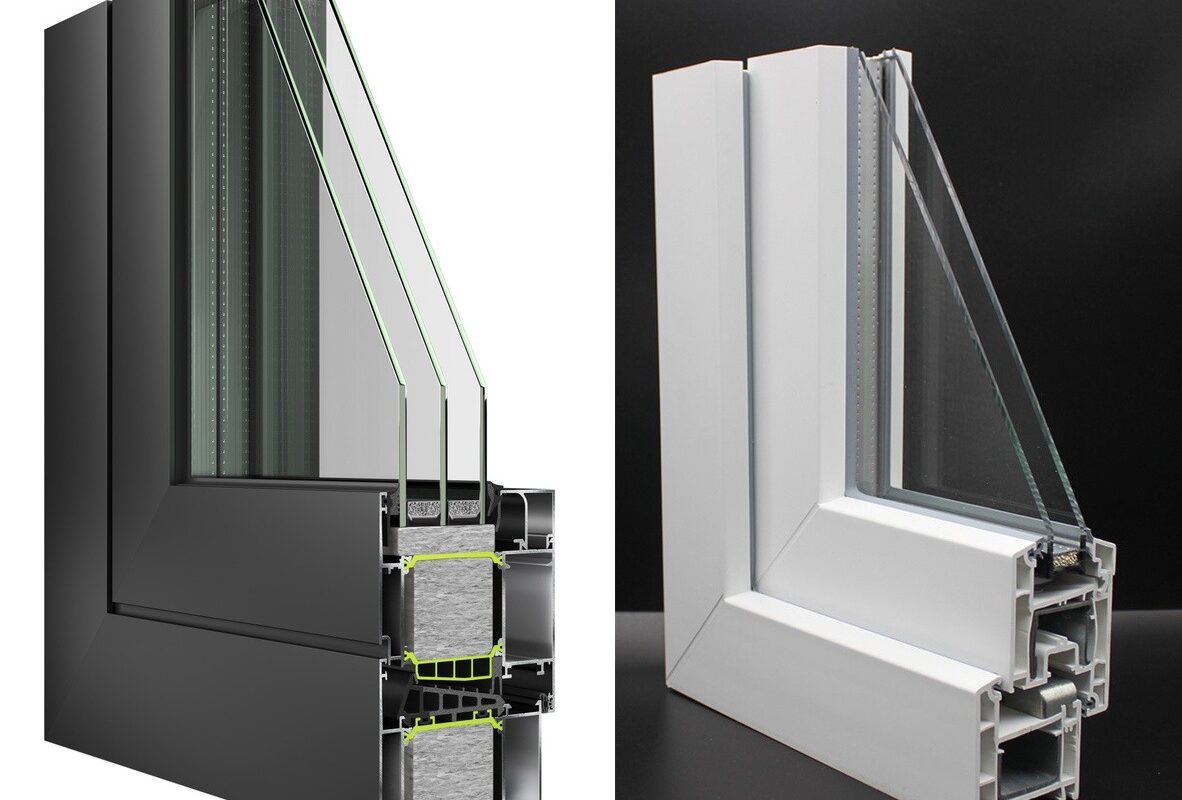
Depending on their construction material, frames (types of frames) are categorized into frames aluminum, in synthetic or PVC frames, and in wooden frames.
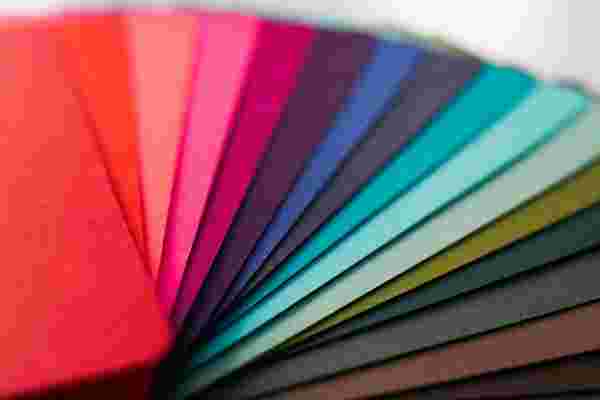
Aluminum frames are characterized by their long-term durability due to the material’s resistance, they prevent thermal losses and maintain the indoor temperature at stable levels. Aluminum is a lightweight, recyclable material with low maintenance costs and is particularly resistant to weather conditions. Aluminum frames can also be electrostatically painted in a wide range of colors, even wood imitation, and can be installed in large openings.
PVC frames are made of polyvinyl chloride, which is a compound of ethylene (also present in petroleum at 43%), chlorine, stabilizers, and plasticizers. They offer high thermal and sound insulation coefficients, are cheaper than other types of frames, and have low maintenance costs! However, PVC frames have limitations regarding the types of frames that can be manufactured (e.g., sliding). Specifically, synthetic frames cannot be manufactured as pocket sliding frames, and in some cases, not even as simple overlapping ones, because they originate from countries where such frames are not commonly used. PVC frames also cannot be painted, and in the case of colored synthetic frames, a film is applied to the front and back of the frame, which is why a different color is observed on the inside when the frame is opened.
Wooden frames have been used for many decades and continue to be used today. They give the space a traditional and luxurious style, while offering excellent thermal and sound insulation performance. On the other hand, wooden frames require frequent maintenance, increasing costs, are susceptible to microorganisms (unlike aluminum and PVC frames), and are more vulnerable to weather conditions.
See also a comparison of aluminum or PVC frames
Simple and Thermal Break Aluminum Frames
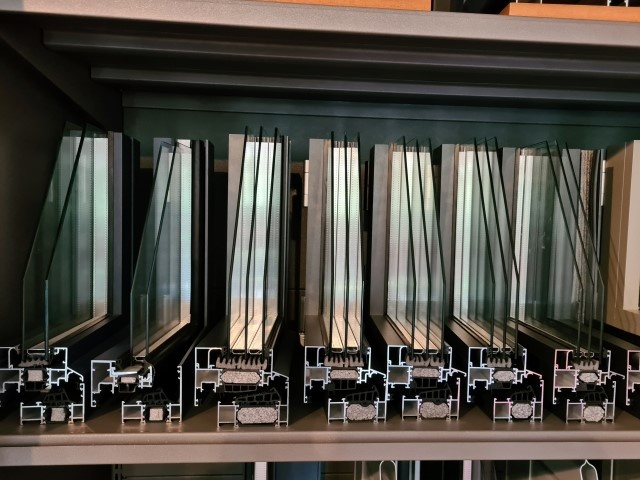
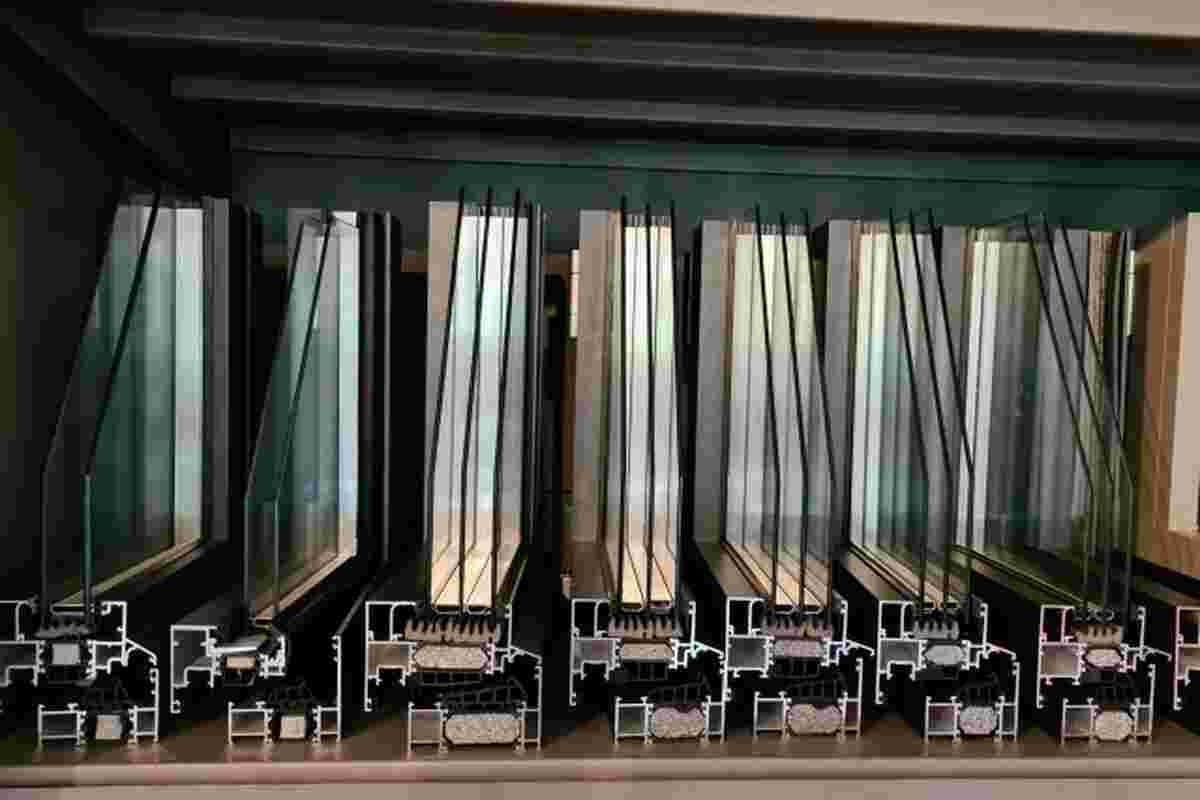
The aluminum profiles used in the construction of aluminum frames are divided into two main categories (types of aluminum frames): simple – conventional – cold frames and thermal break aluminum frames – energy-efficient frames. In thermal break frames, the profile contains a special insulating material, polyamide, which enhances the quality characteristics of the frame (thermal insulation, sound insulation).
Also, energy-efficient glazing refers to double or triple glazing where a special film (a layer of opaque metallic silver oxides) has been applied through a special process to achieve greater thermal insulation and energy savings.
Aluminum frames with thermal break and energy-efficient glass are widely known as energy-efficient aluminum frames. It is not enough, for a frame to be characterized as energy-efficient, to install energy-efficient glass in a simple conventional frame, as was customary in the past. For a frame to be energy-efficient, the presence of a thermal break in the aluminum profile and the installation of energy-efficient glazing are prerequisites.
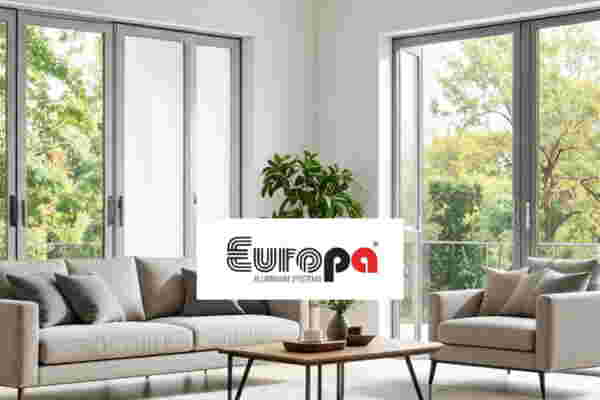
See types of frames with Europa casement frames
alternatively, see all Europa sliding frames.
Types of Frames by Glazing – Glass
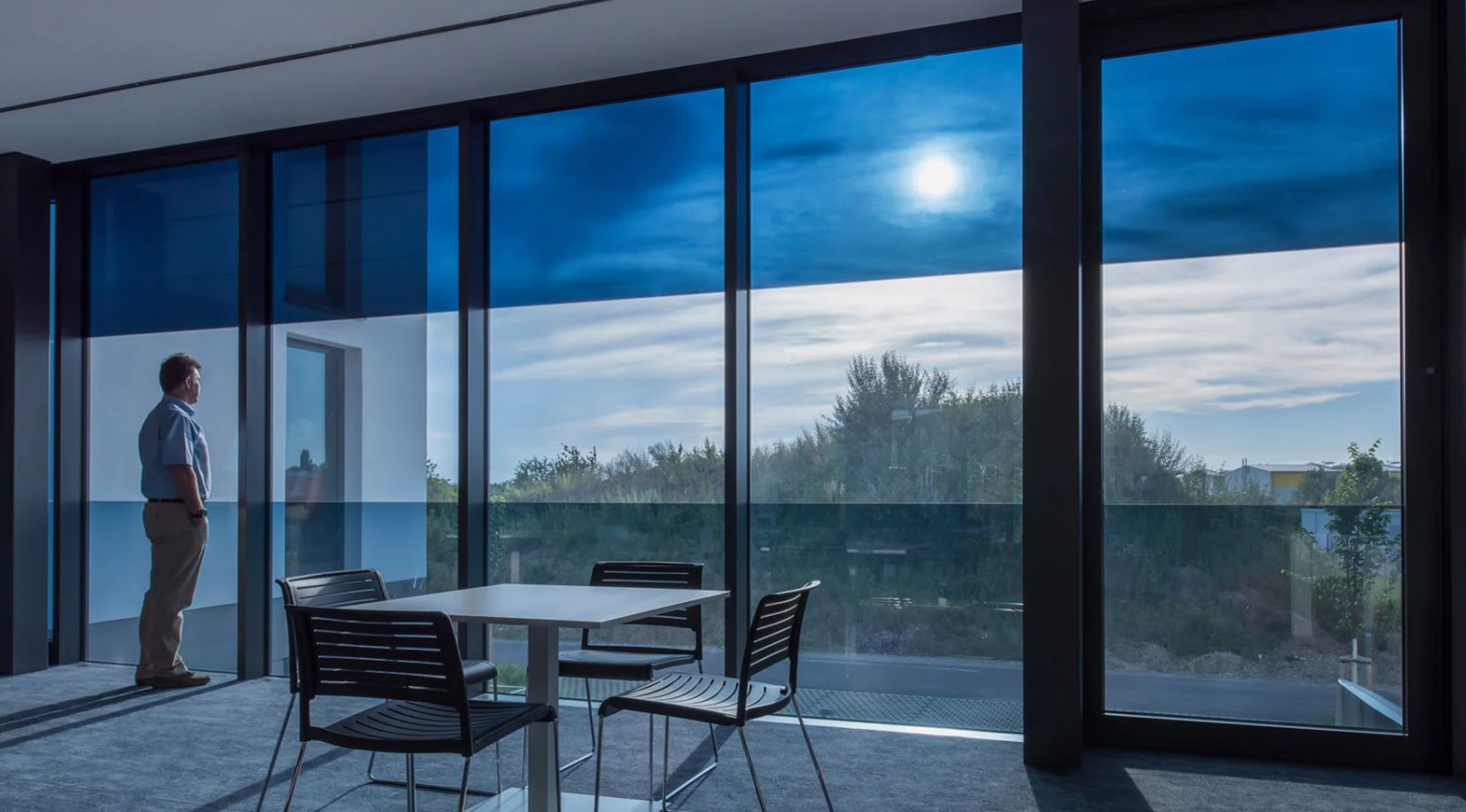
As is now widely known, there are hundreds of types – kinds of glazing with different characteristics, prices, and performance. The most common are single panes, simple double panes, and energy-efficient panes (double or triple). To understand their differences in performance, a single pane has a performance (glass thermal transmittance coefficient – Ug) of approximately 7watts, a simple double pane has a performance of 3watts, while a double energy-efficient pane has a performance of 1watt! From the above, it follows that energy-efficient panes have 7 times greater performance than a single pane and 3 times greater performance than a double pane.
Energy-efficient glazing comes in dozens of types and kinds and is selected based on its performance, the property’s location, and other factors. See all types, qualities, and prices of energy-efficient glass.